
Iron fallout
What the purple shows
The colouris the proof
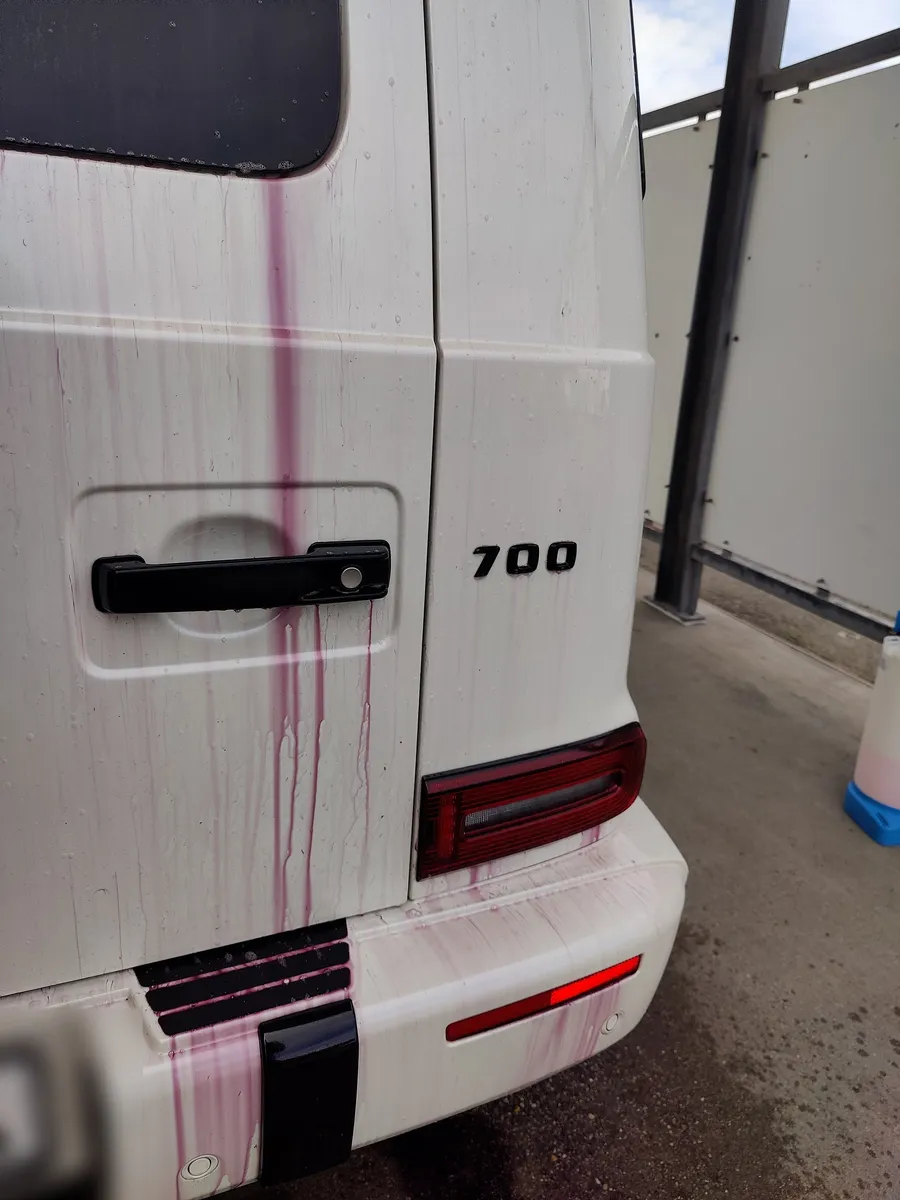
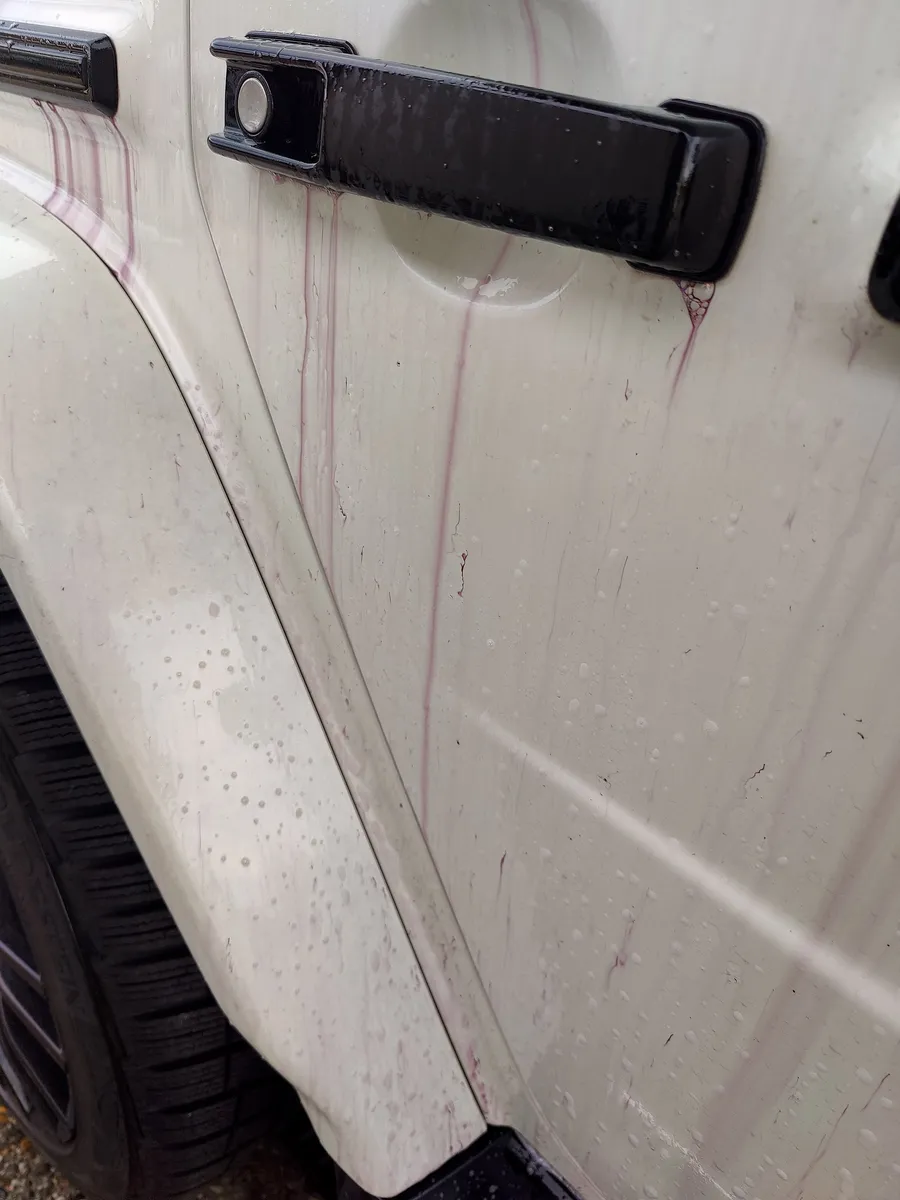
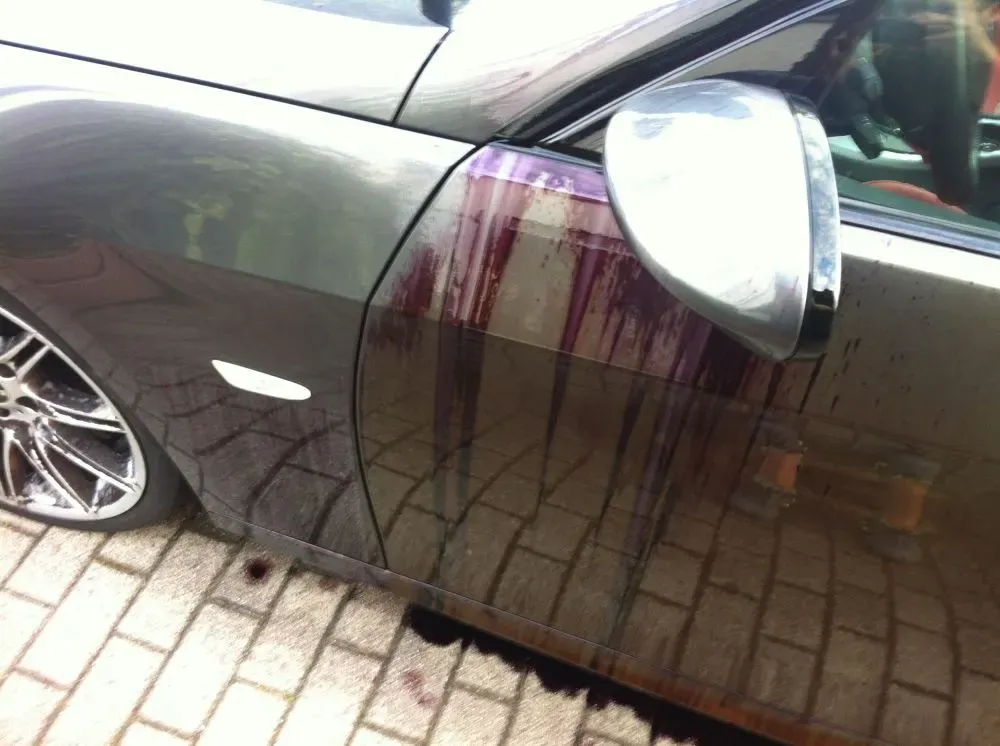
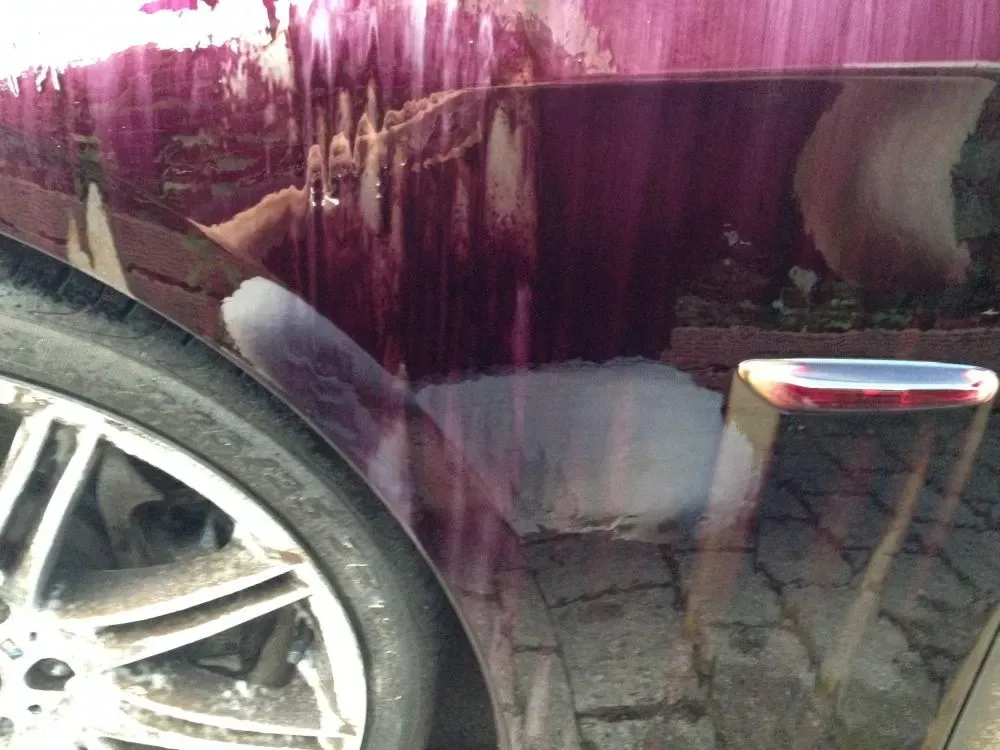
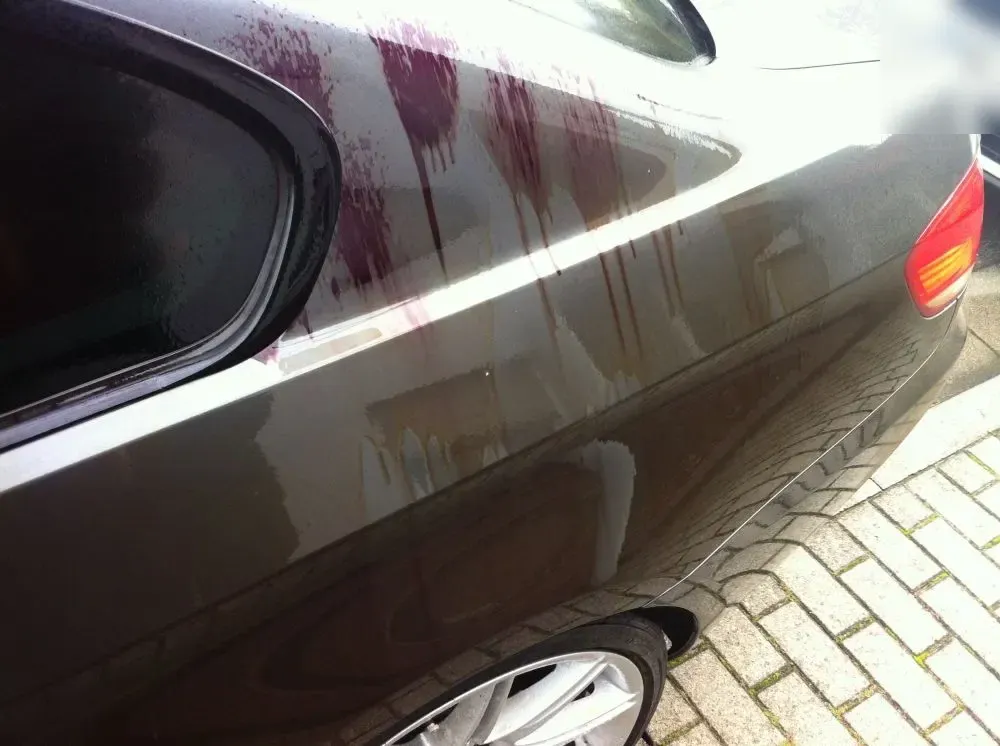
The iron fallout remover reacts with the iron particles embedded in the paint. Wherever it finds iron it turns purple and dissolves the bond without damaging the paint.
The more purple runs off, the more iron was sitting on the surface. On the white G 700 Brabus you can see what was barely visible to the naked eye: iron fallout across the whole flank, although the car looked clean.
After rinsing the paint is smooth and the residues are gone. Only then is polishing, coating or film worthwhile.
Cause
What iron falloutis
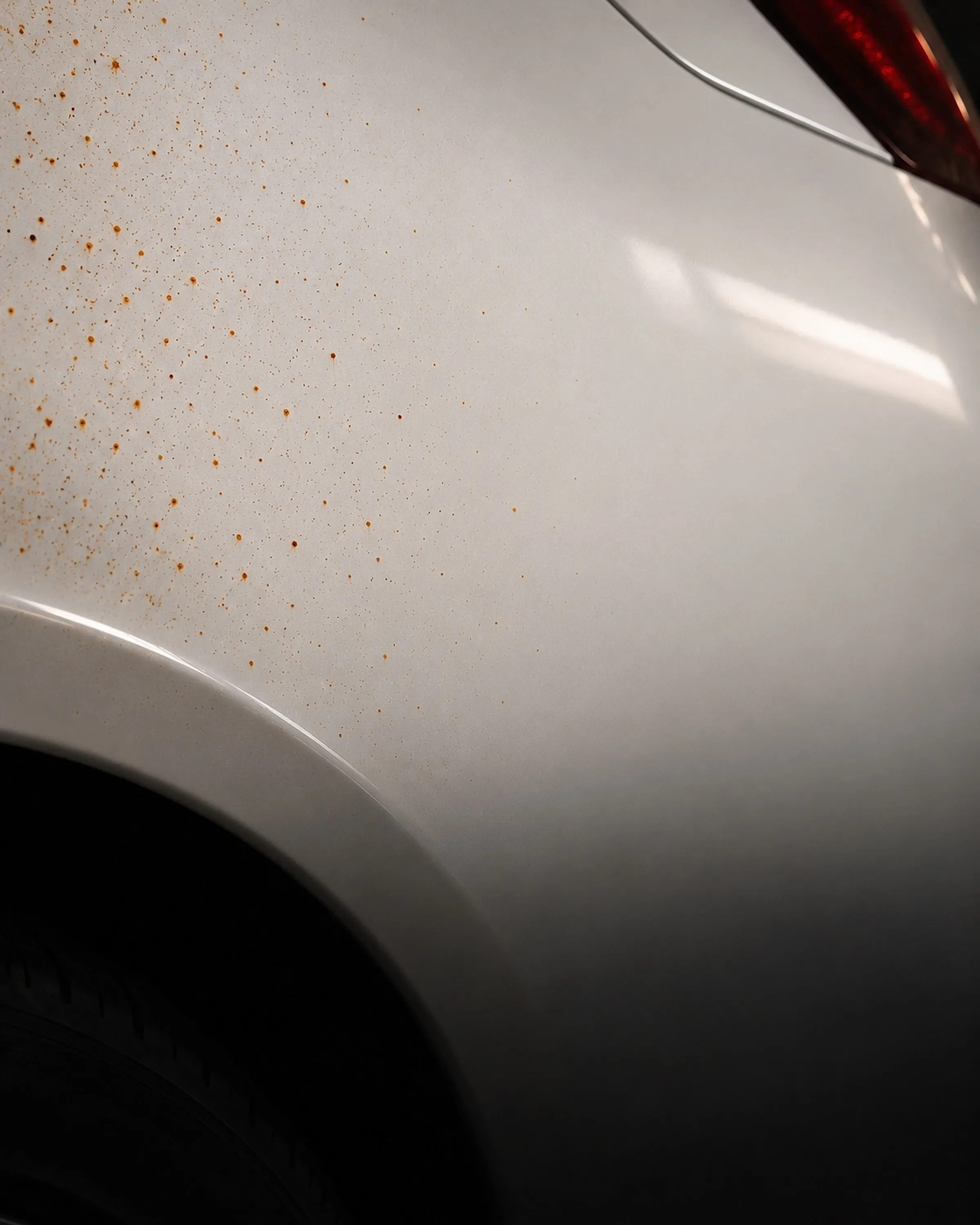
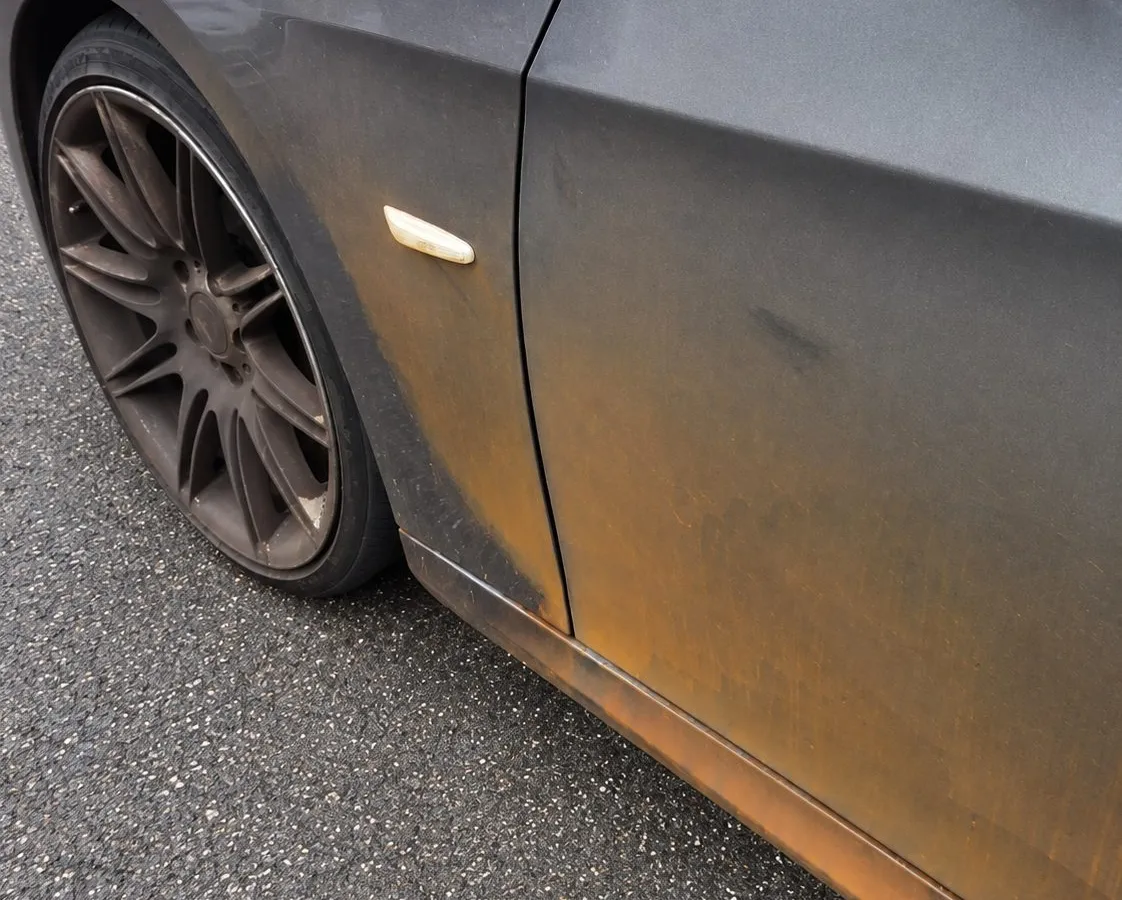
Iron fallout refers to iron-bearing deposits that settle on the surface of a vehicle and oxidise there. On light paint they show up as orange-brown specks. The particles sit on the paint, not underneath it. That is the crucial difference from rust that develops from a stone chip or under a paint layer and has to be assessed separately.
Plastic parts, glass and trim can carry such specks too. The plastic itself does not rust.
- Iron particles sit on the surface and oxidise there
- Paint, plastic, glass and trim are affected
- No rust in the body panels, no rust-through
Affected areas
Where iron particlesfestsetzen
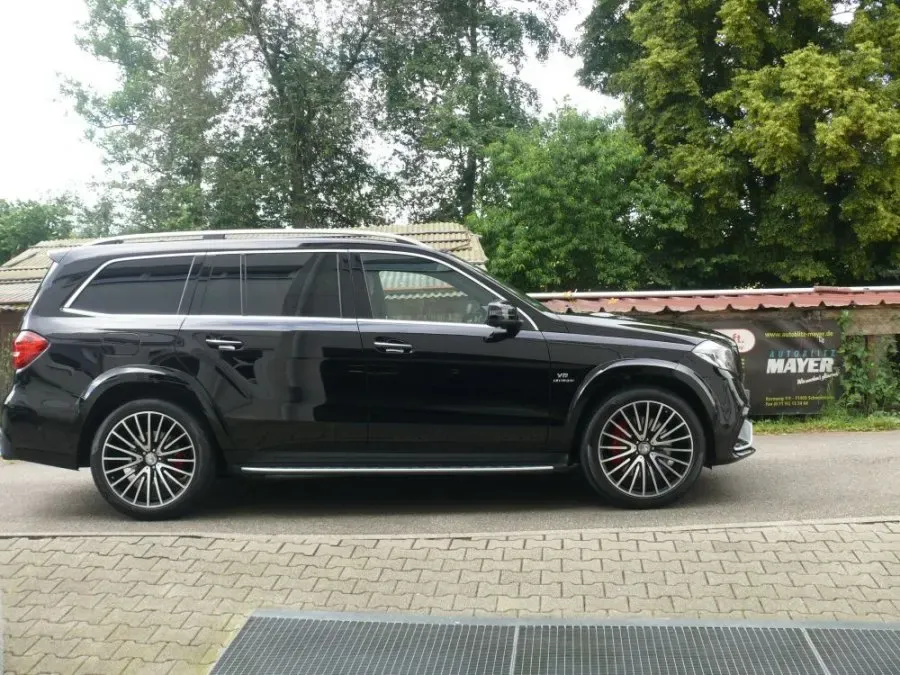
We check sills, the rear, lower doors and panel seams particularly carefully. On SUVs with running boards, iron fallout appears on the running boards regardless of the make. A Mercedes AMG GLS from our workshop is an example.
Iron fallout does not wait for high mileage. A yellow BMW M2 G87 had not yet reached 400 km on the odometer and already had iron deposits on its paint. New cars can be affected too, for example during transport, storage or the first journeys.
Iron fallout is not confined to paint. Tools and stainless steel wheels can also carry iron deposits. Whether and how we treat such parts is decided case by case.
Sills, rear, lower doors and panel seams
Running boards on SUVs, regardless of make
New cars with low mileage
Tools and stainless steel wheels can be affected too
Method
Dissolve chemicallyinstead of rubbing
A normal wash often cannot remove firmly bonded particles. An iron fallout remover suited to the surface dissolves iron deposits in a targeted way. This avoids unnecessary mechanical work. Rubbing or clay bars can leave marks, and abrasive polishing removes paint material. We choose further steps only if the condition requires them.
During the dwell time the remover turns purple. These traces show the reaction of the remover used with iron particles. They indicate neither rust in the body panels nor, on their own, the finished cleaning result. What counts is the check after rinsing. Only then can we judge whether the surface is clean or another pass is needed.
- A suitable iron fallout remover instead of clay bar or polish
- Purple discolouration shows the reaction, not the result
- Assessment only after thorough rinsing

Preparation
Before polishing, coatingand film
Before polishing, coating or wrapping, removing iron fallout is part of careful preparation. Rubbing or polishing on contaminated paint can cause additional marks. That is why iron fallout treatment always comes before polishing, never after.
A clean, suitable surface is required for every coating. Whether a paint correction also makes sense is decided on the vehicle. On the Mercedes AMG GLS, after the iron fallout treatment the paint was sealed with the LZ730 brilliance sealant and the bonnet and front bumper were covered with paint protection film. These details come from an older workshop report.
- Iron fallout treatment before every polish
- A clean surface as the prerequisite for coating and film
- Paint correction only after assessment on the vehicle
From the workshop
Four cases,four solutions
An Audi S3 from our workshop shows in pictures the contamination, the reaction and the result of an iron fallout treatment. On the yellow BMW M2 G87 with under 400 km and on a Cadillac, the purple reaction on the paint surface is clearly visible.
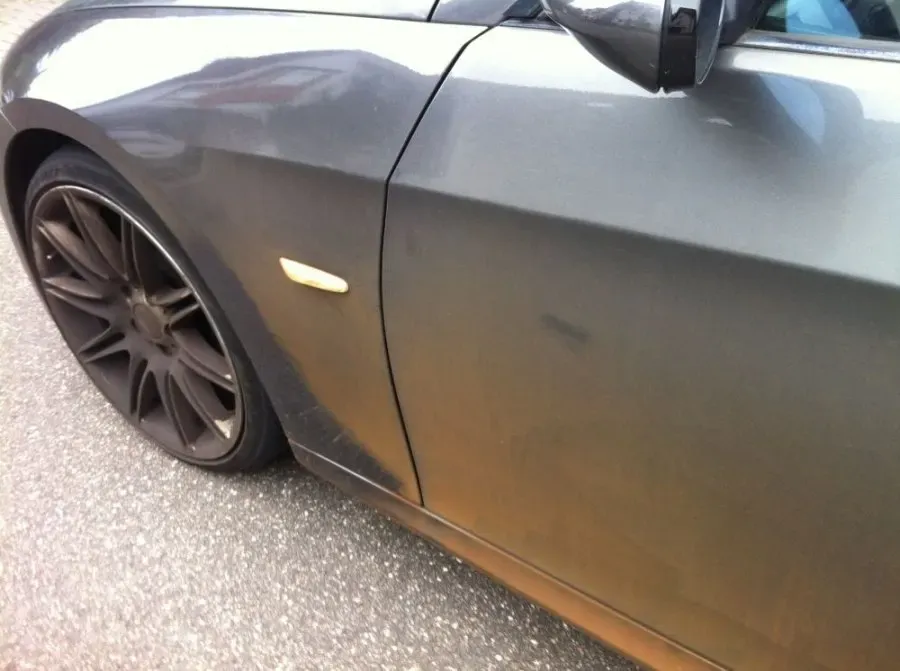
On a BMW E92 the brake discs and brake pads were worn out. Hot metal particles hit the brake line, which burst. Wheels and paint were covered all over with brake fluid and metal particles. Several previously purchased iron fallout removers brought no success. The customer carried out the treatment himself with an iron fallout remover gel and needed 5 litres for it. After one application a start had been made; the whole problem could not be solved in a single pass.
On the Mercedes AMG GLS the running boards already showed the beginnings of iron fallout. After treatment with an iron fallout remover, the car was preserved with a spray gloss, the paint was sealed and the front was covered with film. Both reports come from the archive and describe the situation at the time.
contamination, reaction and result in pictures
reaction on the paint surface
brake fluid and hot metal particles, 5 litres of gel
running boards, coating and film
From the workshop
Iron fallout on the BMW E92
Procedure
Four stepsagainst iron fallout
Dissolve, rinse, check. Then decide which protection follows.
- 01Assess the surface
We check paint, plastic, glass and trim and distinguish surface deposits from rust caused by paint damage. We look particularly closely at sills, the rear, lower doors, panel seams and running boards.
- 02Apply the remover
An iron fallout remover dissolves the iron particles chemically. The purple discolouration shows the reaction. Nothing is rubbed or clayed in this step.
- 03Rinse and check
After thorough rinsing we assess the result. Only now do we decide whether another pass or an additional step is needed.
- 04Agree protection and care
On the clean surface, paint correction, coating or paint protection film follow as needed. You also receive a matched care recommendation, because iron fallout can occur again.
Questions and answers
What customers wantto know beforehand
Where do the orange-brown specks come from?
From iron particles that settle on the surface and oxidise there, brake dust for example.
What distinguishes iron fallout from rust in the metal?
Iron fallout consists of iron deposits on the surface that can be dissolved chemically. Rust from a stone chip or under a paint layer sits in the component; we assess that separately and propose the appropriate repair route.
Why are plastic parts affected too?
Because the rust specks can come from metal particles lying on the surface. The plastic itself does not rust. Glass and trim can carry such deposits too.
Can a new car already have iron fallout?
Yes. A BMW M2 G87 had not yet reached 400 km on the odometer and already had iron deposits on its paint. Iron fallout occurs, for example, during transport, storage or the first journeys.
Does purple discolouration already mean a perfect result?
No. With suitable products the discolouration shows a reaction with iron deposits. The result can only be judged after thorough rinsing and checking.
Can iron fallout simply be polished away?
No, not without preparation. Before polishing, firmly bonded particles should be removed appropriately. Rubbing or polishing on contaminated paint can cause additional marks, and abrasive polishing removes paint material.
Does a coating help against new iron fallout?
Yes, it makes cleaning considerably easier because deposits adhere less. Iron fallout is a recurring issue, so checking and matched care are part of it.
Does iron fallout have to be removed before paint protection film or a ceramic coating?
Yes. Before polishing, coating or wrapping, removing firmly bonded particles is part of careful preparation. A clean, suitable surface is the prerequisite for any protection.
Can I treat iron fallout myself?
Yes, for normal contamination with a suitable iron fallout remover. Follow the product instructions, check material compatibility, work on cool surfaces, do not let the cleaner dry and rinse thoroughly.
What do you do about brake fluid and hot metal particles?
That is a special case, which we assess on the vehicle and treat in several passes. On the BMW E92 from our archive, 5 litres of iron fallout remover gel were needed before the paint was clear again.
Questions from the workshop, answered briefly. Your question is missing? 07195 135464
Projects
From the archive
Iron fallout
Get in touch
Tell us about your vehicle and what you need, ideally with three photos. We will get back to you with a first assessment.
Opening hours
- Monday to Friday
- 08:00 to 18:00
- Saturday
- 09:00 to 14:00
Appointments outside opening hours by arrangement.