Kornweg 1/1, 71409 Schwaikheim · Mon to Fri 08:00 to 18:00, Sat 09:00 to 14:00
Paint correction
93.7 GU gloss after the correction
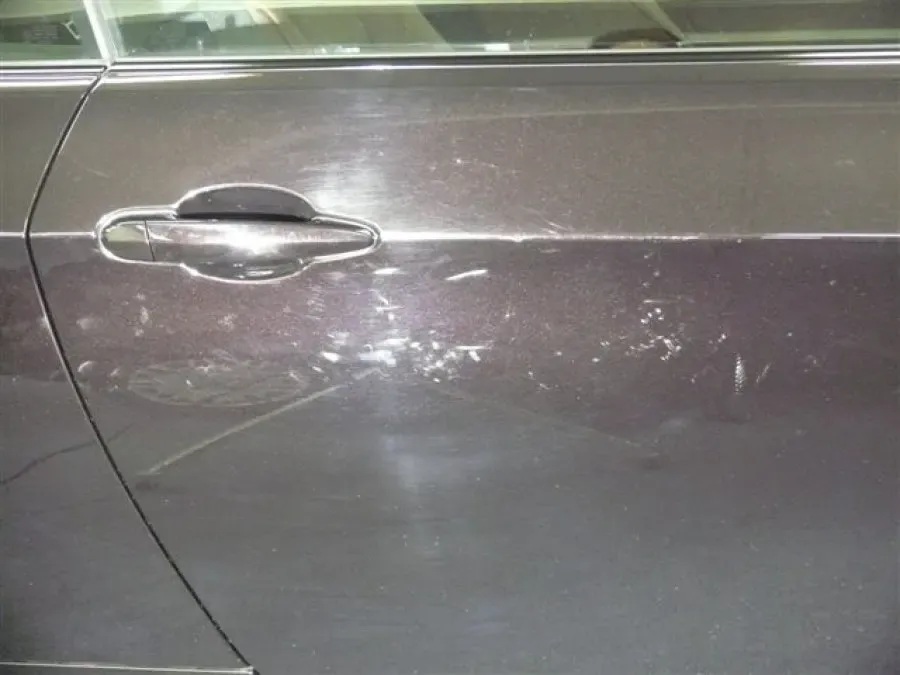
48 GU the same door before
approx. 40 µm clear coat in a factory finish
4 packages from gloss refresh to high end
Effect
What paint correctionachieves
Fine wash marks, holograms from incorrect polishing technique and light signs of use sit in the clear coat. Polishing reduces them by removing a thin layer of clear coat and levelling the surface again. The result is clearer reflections and more depth in the paint.
First we distinguish deposits from real defects in the paint. Firmly bonded particles such as iron fallout cannot be polished away; they have to be removed before polishing in a way suited to the material. Only then does it become clear which marks really lie in the clear coat.
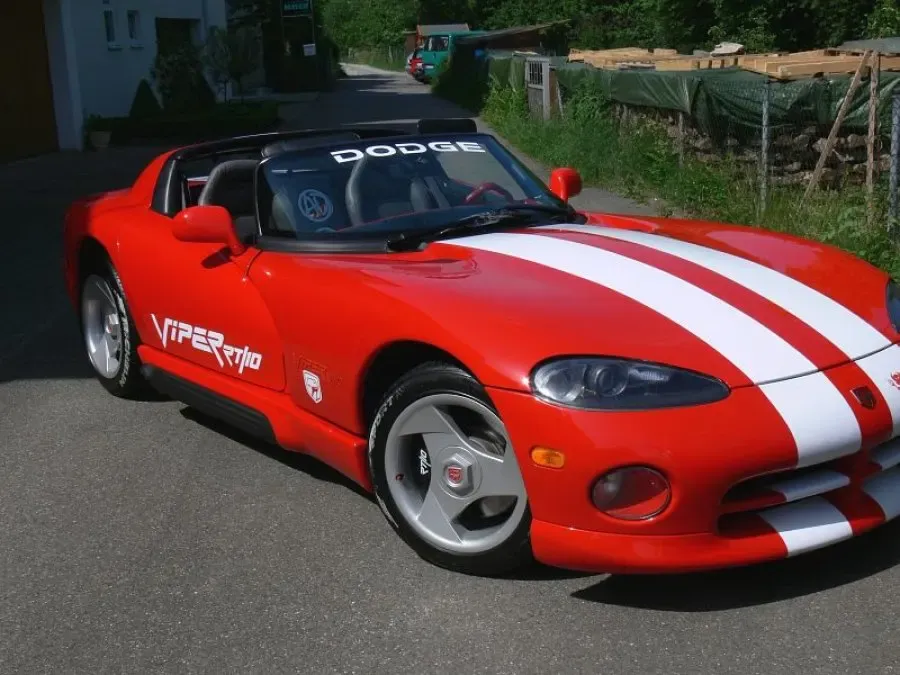
Paint type, existing defects and repair history determine the treatment. Because every polish removes material, maximum correction is not automatically the best solution. On a Dodge Viper RT/10 from our workshop, holograms, deep scratches and an imperfectly executed repaint on a plastic body had to be dealt with; on a BMW E90 335i, heavy scratches and holograms stemmed from incorrect treatment.
01
Wash marks, holograms and light signs of use sit in the clear coat
02
Polishing removes material, so as much as necessary and as gently as possible
03
Iron fallout and deposits are removed before polishing
Structure
What polishingremoves
Scratches and holograms sit in the clear coat. Paint correction removes only as much of it as necessary. We measure before and protect afterwards.
01
02
03
04
05
06
01 / 06
Protection
LZ 730 or ceramic
After the correction a sealant secures the result and makes care easier.
02 / 06
Hologram free finish
Fine polishing
A mirror image without haze, checked under spot light and in daylight.
03 / 06
Removal in stages
Cutting and fine polishing
Several stages remove clear coat in a controlled way. The coating thickness is measured at several points beforehand.
04 / 06
Clear coat with scratches
approx. 40 µm
Wash marks and holograms sit in the clear coat, not in the colour.
05 / 06
Base coat
approx. 15 µm
The colour stays untouched. The correction ends before it is reached.
06 / 06
Filler and primer
approx. 30 µm and 20 µm
Underneath lies the body made of steel or aluminium.
01
ProtectionLZ 730 or ceramic
After the correction a sealant secures the result and makes care easier.
02
Hologram free finishFine polishing
A mirror image without haze, checked under spot light and in daylight.
03
Removal in stagesCutting and fine polishing
Several stages remove clear coat in a controlled way. The coating thickness is measured at several points beforehand.
04
Clear coat with scratchesapprox. 40 µm
Wash marks and holograms sit in the clear coat, not in the colour.
05
Base coatapprox. 15 µm
The colour stays untouched. The correction ends before it is reached.
06
Filler and primerapprox. 30 µm and 20 µm
Underneath lies the body made of steel or aluminium.
Simplified example of a factory finish on metal, not to scale. The thicknesses are guide values, not a polishing reserve.
Measurement
Coating thickness beforepolishing
A factory paint finish on metal consists, in simplified terms, of e-coat primer (approx. 20 µm), filler (approx. 30 µm), base coat (approx. 15 µm) and clear coat (approx. 40 µm). These values are guide values, not a polishing reserve. 1 µm equals 0.001 mm. Factory and repair paint structures differ, and some paints have no separate clear coat.
Before every correction we measure at several points on clean, suitable surfaces. This reveals differences between components and possible earlier repairs. Common magnetic or eddy current gauges measure the entire coating above the substrate on metal, not the clear coat alone. A high reading therefore does not prove a large polishing reserve.
Plastic parts require a different, suitable measuring method. Curves, edges and the gauge itself limit the significance of the readings. Measurement, visual inspection and a small test spot belong together; there is no universal safe polishing limit. Our measurement records document the values for the left and right sides of the vehicle as well as the bonnet, roof and boot lid.
Several measuring points per component on clean surfaces
Gauges measure the entire coating, not the clear coat alone
Plastic needs its own measuring method
Measurement, visual inspection and test spot complement each other
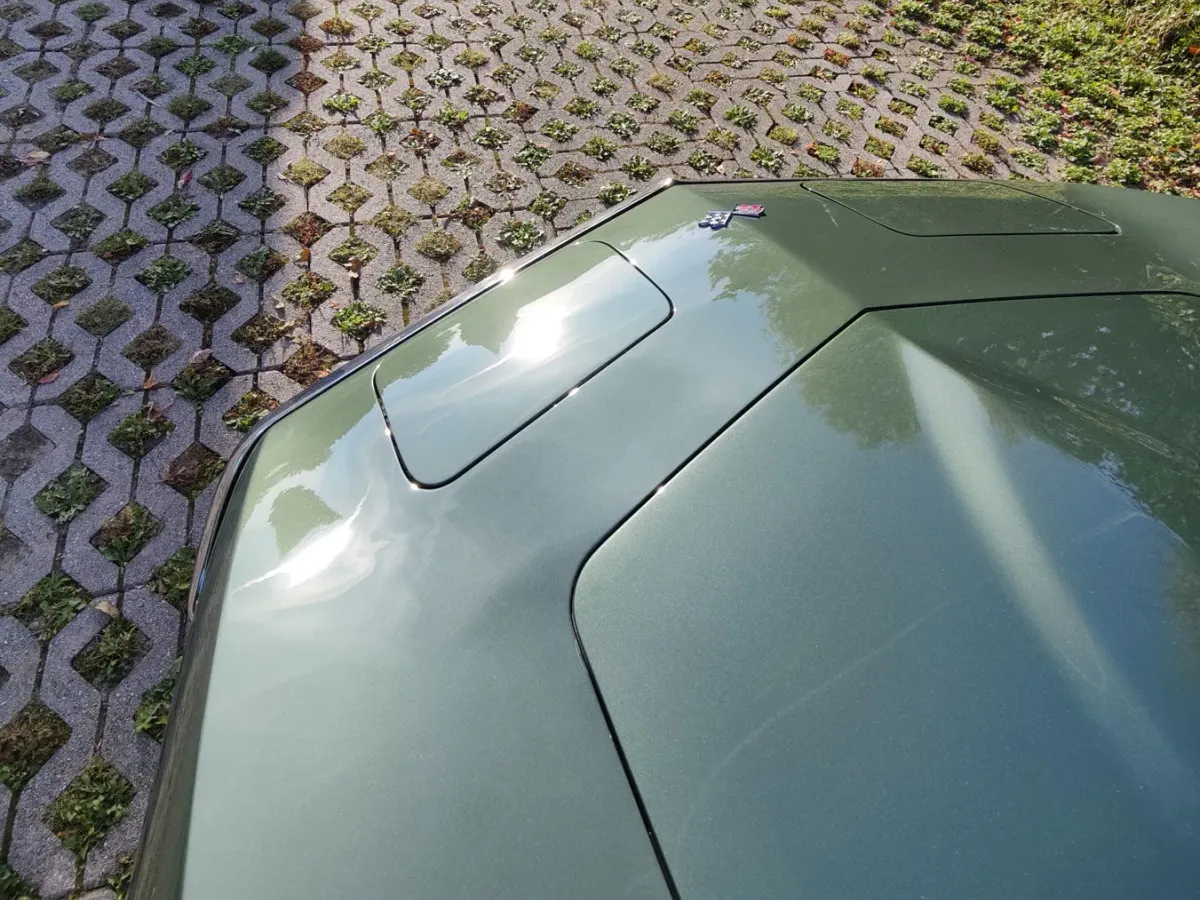
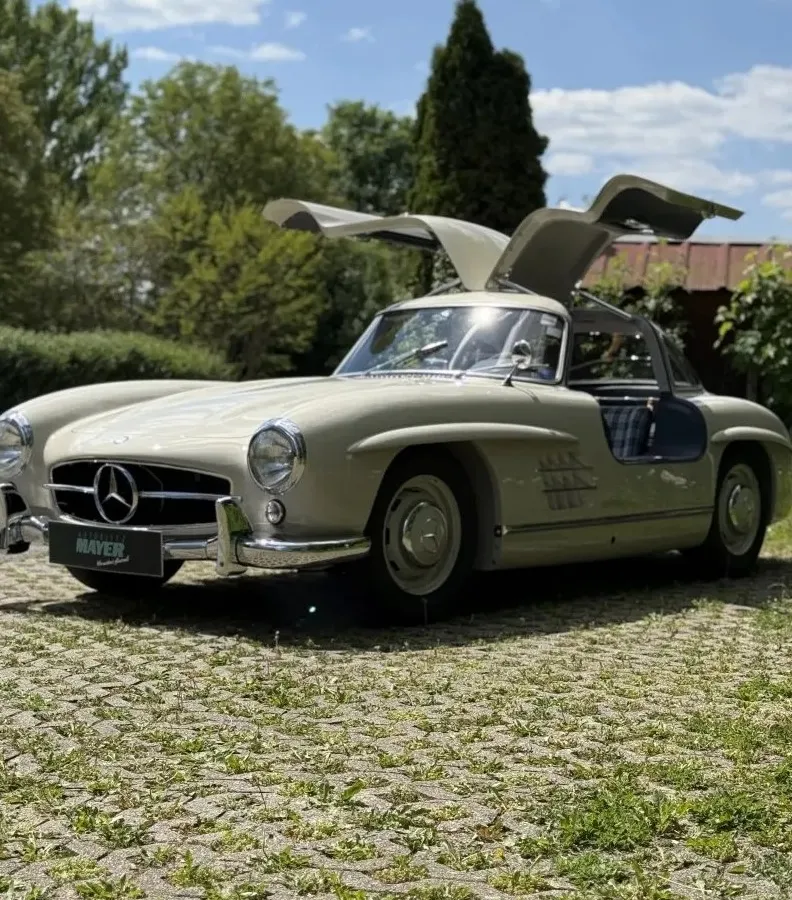
Corvette C3, edges and chrome masked before polishing
Preparation
Protect the edges,clean the surface
On the bonnet, wing or door, the polishing machine's pad can also catch the opposite paint edge. That is why we mask exposed and adjacent edges as well as plastics and rubber seals before the machine runs. Pad size, handling and pressure are adapted to the contour of the component.
Masking lowers the risk but does not make an edge immune to being polished through. Edges and curves remain areas where we work with reduced pressure and smaller pads. Polish residues on plastics and seals, such as the Dodge Viper brought with it from an earlier treatment, are avoided through this preparation.
Adjacent edges, plastics and seals are masked
Pad size, handling and pressure follow the contour
Masking lowers the risk but does not replace careful handling
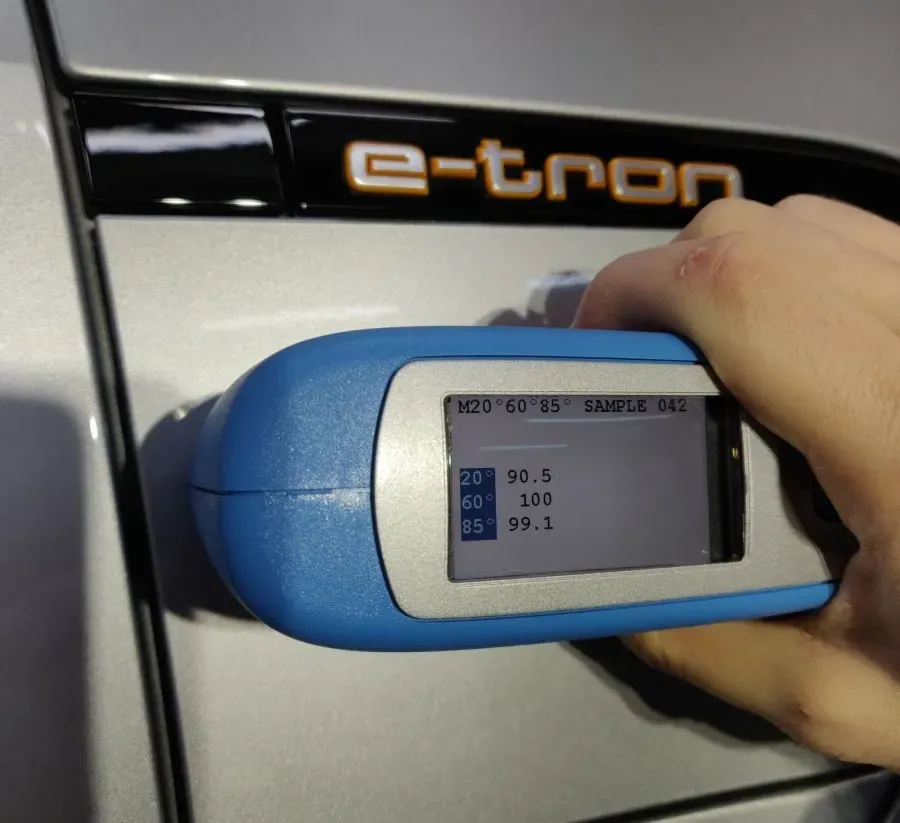
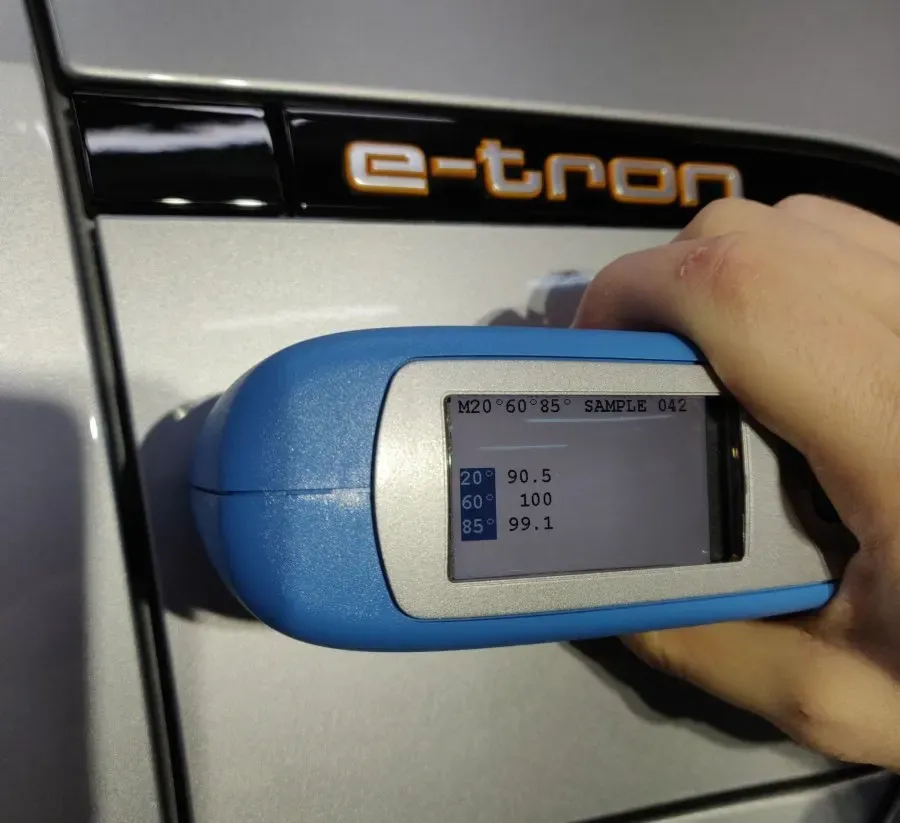
Gloss measurement with the BYK micro-TRI-gloss
Inspection
Measure glossinstead of guessing
Gloss can be measured. We work with the BYK micro-TRI-gloss gloss meter, which records the measuring angles 20°, 60° and 85° simultaneously and reports them in gloss units (GU). The standard angle is 60°. If the value there is above 70 GU, the 20° angle is decisive for high-gloss paints, because it rates haze more critically. Before measuring, the instrument is calibrated on the calibration tile supplied.
On a deliberately heavily damaged door we initially measured 48 GU at the 20° angle. After our standard paint detailing the value was 93.7 GU; the instrument's calibration tile reaches about 93 GU at 20°. Individual deep clear coat defects remained visible, because they cannot be completely removed by polishing. An Audi e-tron with around 14,000 km and little care reached 100 GU at 60° and 90.5 GU at 20° after detailing.
The measurement also shows what protection achieves: an Audi RS6 with paint protection film fitted by us still measured more than 90 GU in the 20° range after more than three years and over 50,000 km. Before wrapping, the paint had merely been given normal detailing, without an additional coating.
BYK micro-TRI-gloss with 20°, 60° and 85°
For high gloss, the 20° value counts
48 GU before and 93.7 GU after detailing on the same door
Before and after
Hologramsentfernt
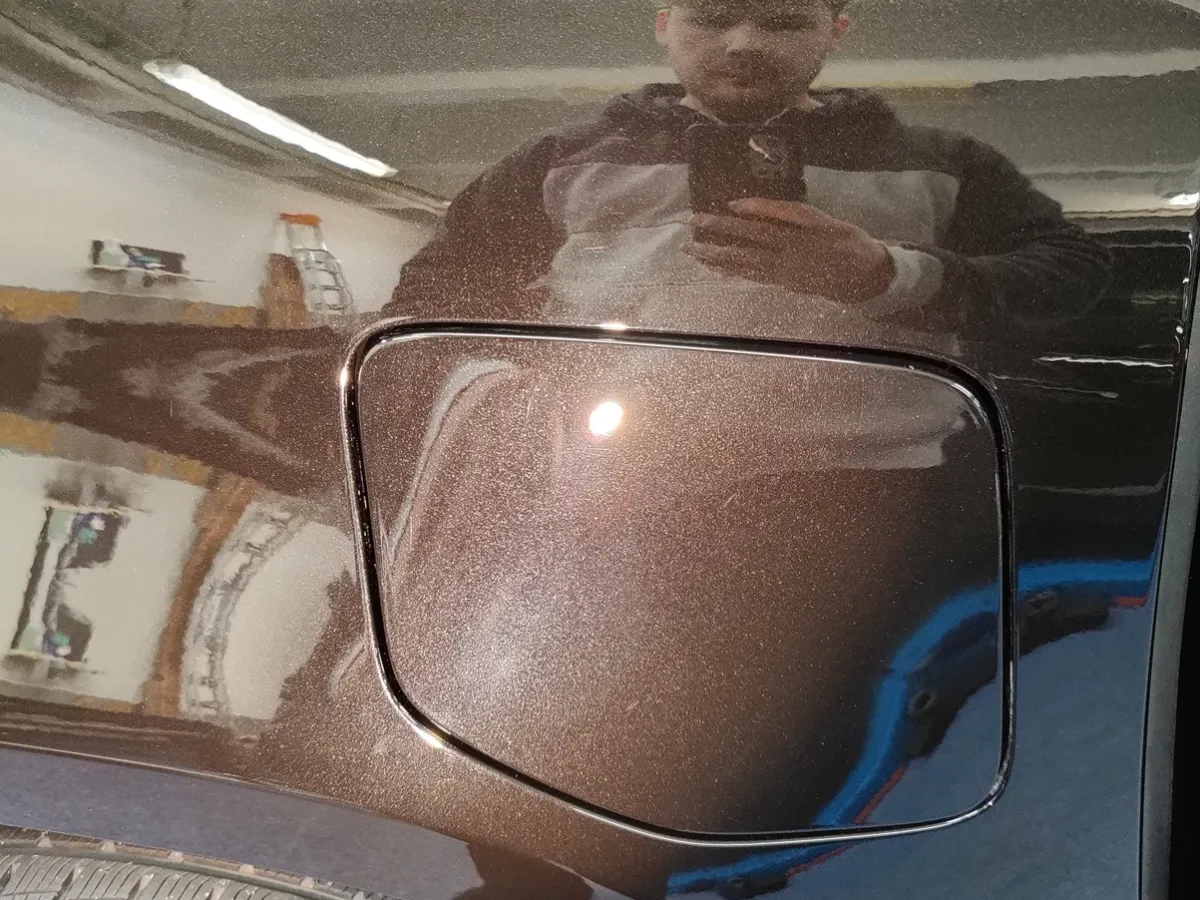
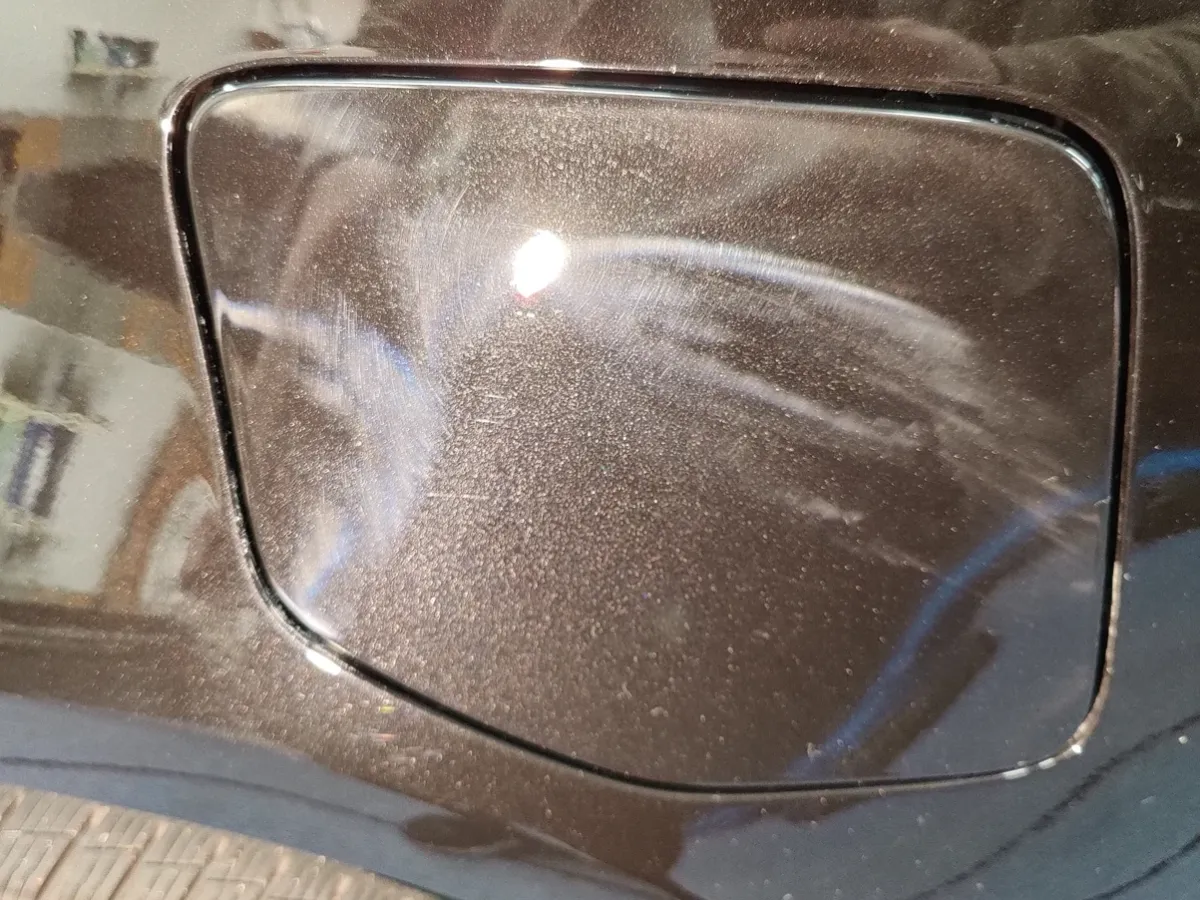
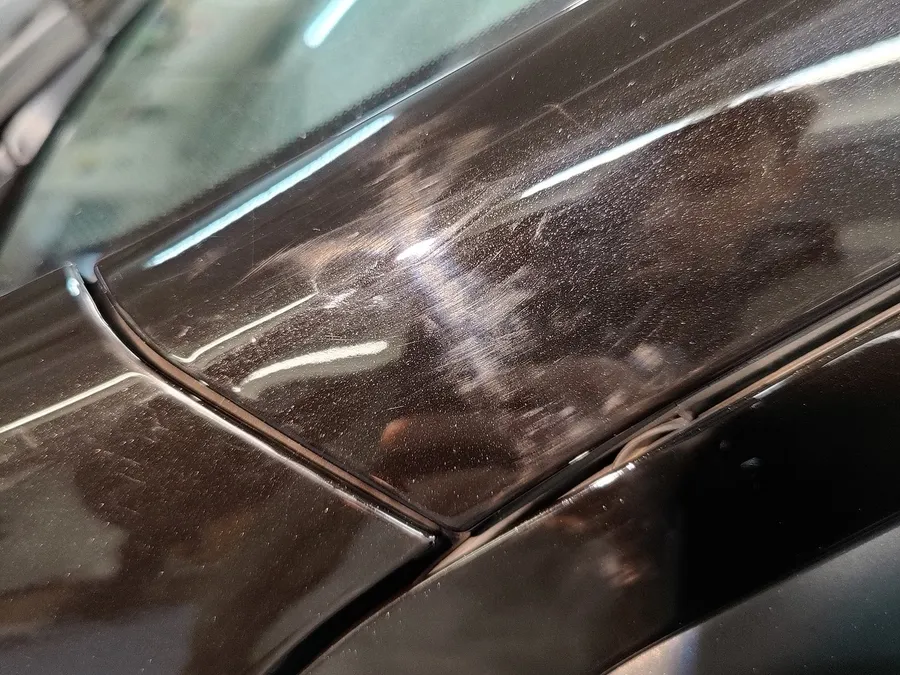
Drag the slider across the image. Dark paint with polishing marks before and after paint correction.
BeforeAfter
Holograms removed, paint correction
From the workshop
Four spots,before and after
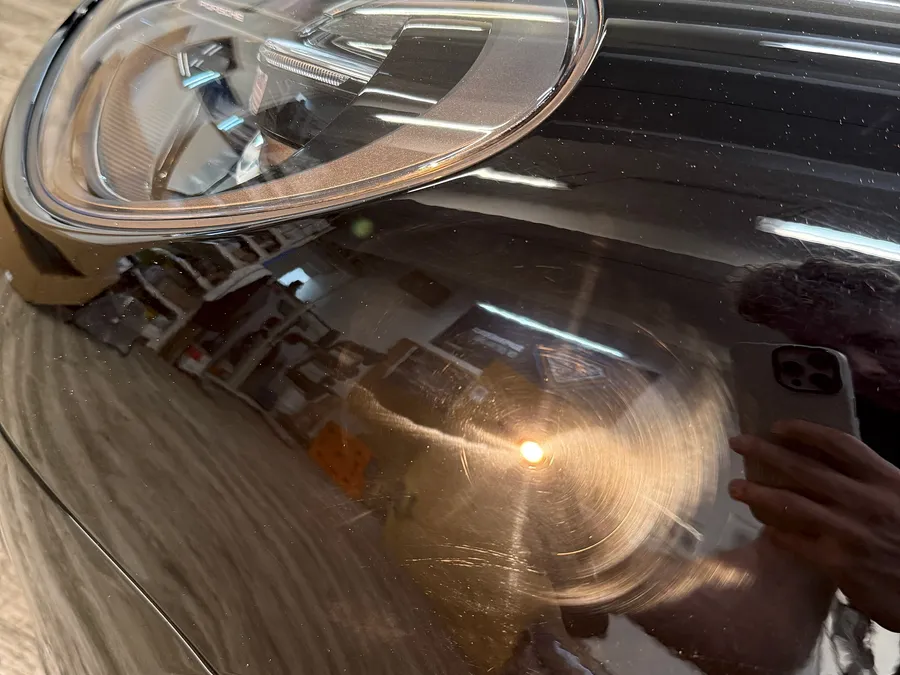
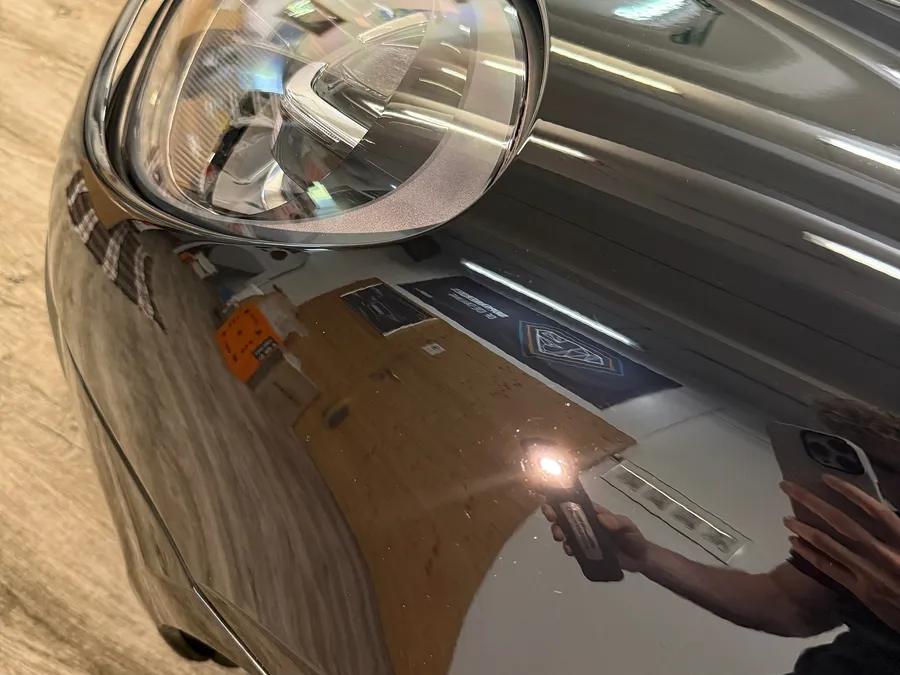
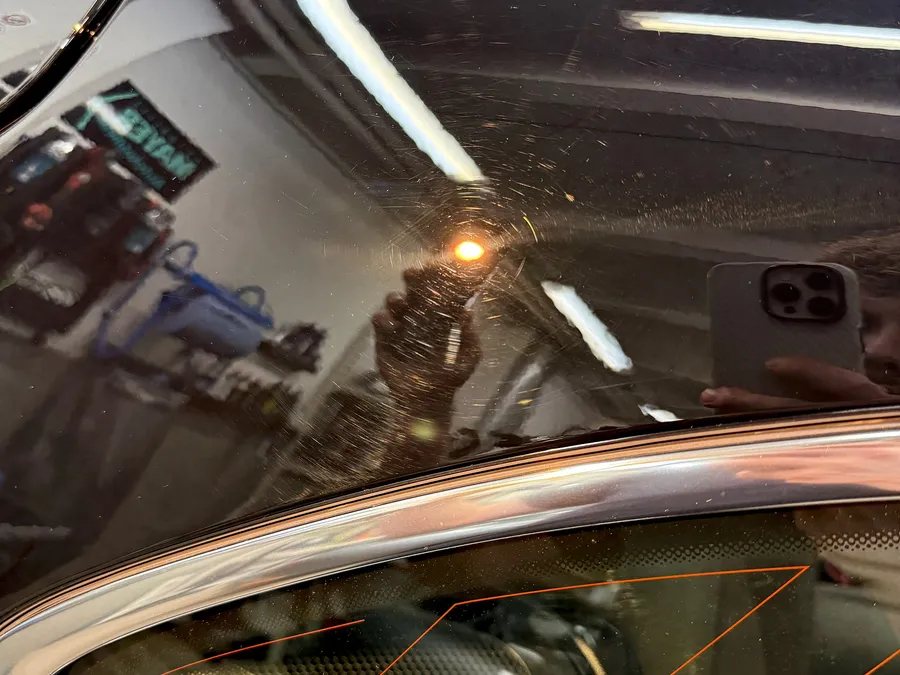
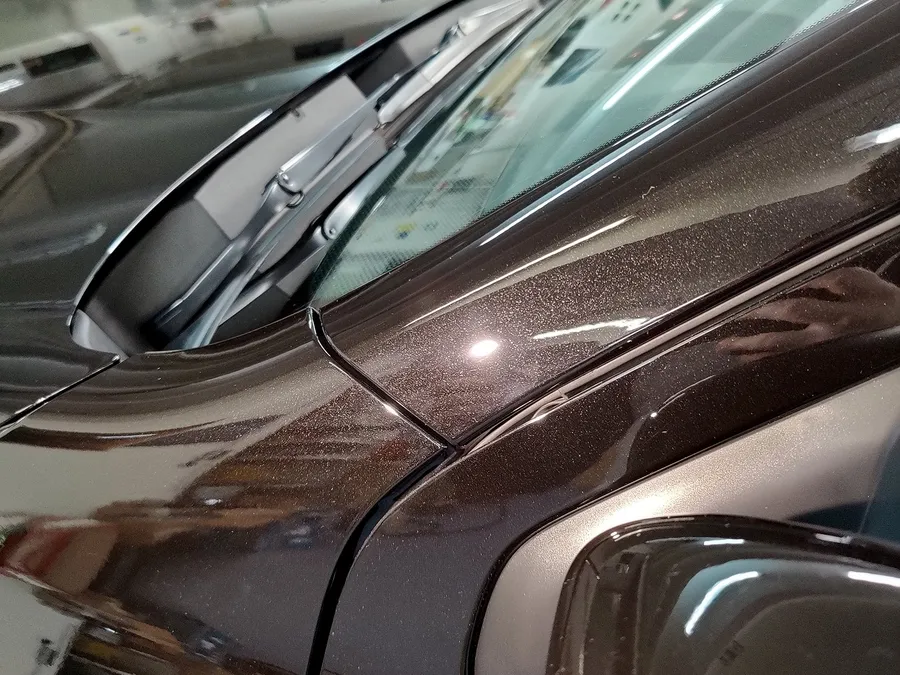
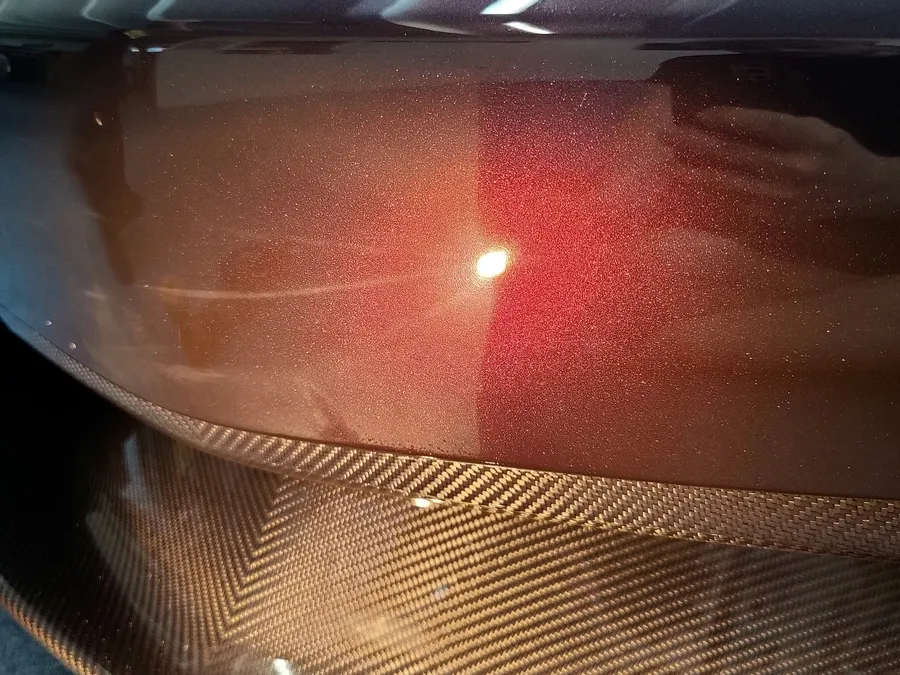
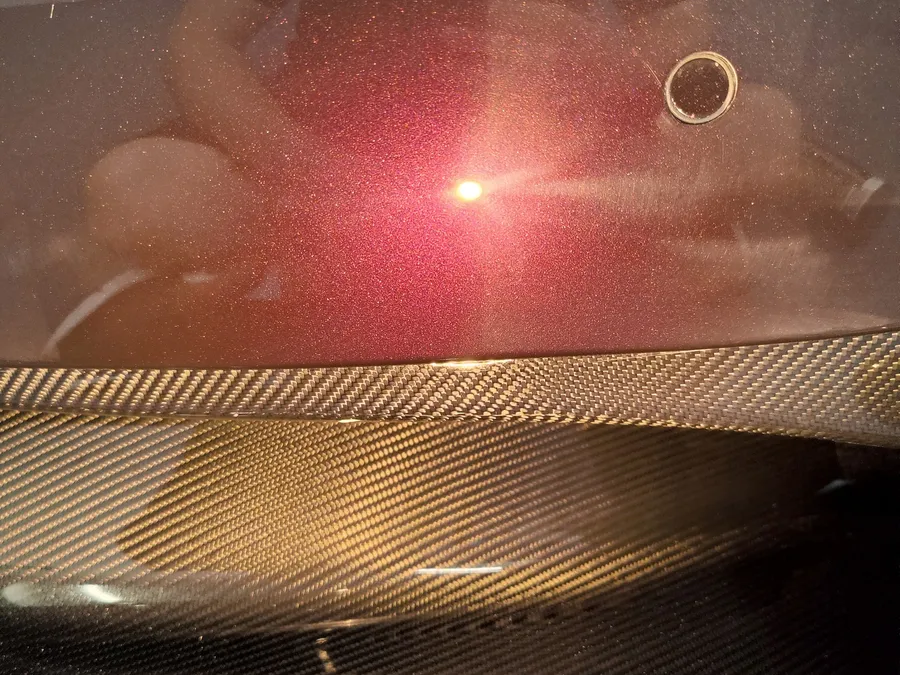
Real photos from the workshop, each showing the same spot before and after paint correction.
BeforeAfter
Porsche, headlight and wing
BeforeAfter
Porsche, side panel
BeforeAfter
A pillar
BeforeAfter
McLaren 570S, front lip
As much as necessary,as little as possible.
packages
Vehicle detailingmade to measure
No two paint finishes are alike. Age, type of paint, previous work, wash marks, scratches, resprays and the remaining paint thickness determine which treatment makes technical sense.
That is why high-quality detailing with us does not begin with the polishing machine, but with an assessment of the vehicle.
Depending on the package and paint condition, our procedure includes:
thorough vehicle cleaning that is as gentle on the paint as possible
chemical and mechanical decontamination, where required
assessment of the paint condition under suitable inspection lighting
paint depth measurement in relevant areas
selection of the appropriate polishing and correction steps
treatment that is gentle on material and paint
checking the result during and after paint correction
careful preparation of the surfaces for the respective paint protection
final quality inspection
Which treatment makes sense is decided on the basis of the vehicle's actual condition, not according to a rigid scheme.
Package 1
Gloss Refresh
For well-kept vehicles with light signs of use and fading gloss.
A gentle machine polish improves the gloss, colour depth and clarity of the paint finish. Light wash marks and superficial signs of use can be noticeably reduced.
Included
professional paint preparation
gentle single-stage gloss polish
reduction of light wash marks and signs of use
noticeable improvement in gloss and paint clarity
final inspection of the paint finish
Ideal for: well-kept vehicles, seasonal vehicles and paints that do not require intensive correction.
Package 2
Intensive Paint Correction
For vehicles with more pronounced wash marks, holograms and heavier superficial paint defects.
After assessing the paint condition, the treatment is tailored to the paint type, the depth of the defects and the paint substance available.
Through several coordinated correction and finishing steps, we reduce existing defects as far as is technically sensible and gentle on the paint.
Included
extensive paint preparation
assessment of the paint condition
paint depth measurement in relevant areas
multi-stage paint correction
reduction of wash scratches, holograms and other correctable paint defects
finish to optimise gloss, clarity and colour depth
subsequent multi-layer LZ730 paint sealant
Ideal for: used vehicles, demanding paint colours and vehicles whose paint finish is to be visibly enhanced.
Package 3
Exclusive+
Intensive paint correction combined with high-quality ceramic surface protection.
This package combines the comprehensive paint detailing of package 2 with a ceramic coating for easier care in the long term and high-quality surface protection.
First the paint condition is optimised as far as possible. Only then are the prepared surfaces protected with ceramic.
Included
all work steps of the Intensive Paint Correction
multi-stage paint optimisation
careful preparation of the surfaces for the coating
ceramic coating of the exterior paint
ceramic coating of suitable unpainted and painted exterior plastics
final quality inspection
In this package, our ceramic protection system is used instead of the LZ730 sealant.
Ideal for: high-quality everyday vehicles, sports cars, new vehicles and enthusiasts' vehicles where paint condition and long-term surface protection are equally important.
Package 4
High-End Enthusiast Package
Our comprehensive vehicle detailing for particularly demanding vehicles and owners.
Here we look not only at the paint but at the vehicle as a whole. Visible and frequently overlooked areas are cleaned, reconditioned and, where technically and materially sensible, protected.
IncludedPaint & body
all services from Exclusive+
intensive multi-stage paint correction
ceramic coating of the exterior paint
protection of suitable exterior plastics
Wheels & wheel areas
intensive cleaning of the wheels
cleaning of the accessible wheel arch areas
coating of the wheels
coating of suitable wheel arch liners
coating of the brake calipers
Details
clean and polish exhaust tips
protect suitable metal surfaces
ceramic coating of the vehicle glass
Engine bay
engine bay cleaning suited to the materials
gentle reconditioning of suitable surfaces
Interior
comprehensive interior cleaning
cleaning of the various surfaces suited to each material
For convertibles
thorough soft top cleaning
coating or fabric protection matched to the respective soft top material
Ideal for: sports cars, classics, collectors' and enthusiasts' vehicles, and vehicles for which an exceptionally comprehensive standard of care and protection is desired.
Not every vehicle needs the largest package.
Our recommendation depends on the paint condition, how the vehicle is used and the desired result.
Deep scratches, stone chips, damaged paint layers or defects that have already penetrated the clear coat cannot always be completely removed by paint correction. For us, preserving sufficient paint substance takes priority over maximum defect removal.
That is why, before the work, we check which measures are technically sensible for your vehicle and put together the appropriate detailing from them.
Professional paint correction improves the gloss, clarity and visual appearance of the surface. To keep this result for as long as possible, surface protection matched to the vehicle, its use and the desired level of protection can be applied afterwards.
In our Intensive Paint Correction the detailed paint is then protected with an LZ730 coating. From the Exclusive+ package upwards, a ceramic coating is used instead for the exterior paint and suitable exterior plastics. In the High-End Enthusiast Package the protection concept is additionally extended to further suitable areas of the vehicle such as wheels, brake calipers, glass and other surfaces.
For areas at increased risk from stone chips and mechanical stress, paint protection film can make sense instead. It serves a different purpose from a ceramic coating and can physically protect particularly exposed paint surfaces.
LZ730 coating in the Intensive Paint Correction
Ceramic coating from Exclusive+ upwards
Paint protection film for mechanical protection
Procedure
Four stepsto the shine
Assess, clean, correct, protect. In that order.
01Assess the paint and its surroundings
We inspect the paint and adjacent materials under suitable light, measure the coating thickness at several points and so identify differences and possible earlier repairs.
02Clean and remove deposits
Soiling and firmly bonded particles such as iron fallout are removed in a way suited to the material. Adjacent edges, plastics and seals are masked.
03Correct the paint finish
After a small test spot we polish in stages, as far as the paint condition allows. Pad size, handling and pressure follow the contour; we check the result with different light sources.
04Agree protection and care
To suit the package and the use, LZ730, ceramic coating or paint protection film follows. We discuss further care with you at the vehicle.
Questions and answers
What customers wantto know beforehand
What happens to deep scratches?
A polish levels the surroundings and removes material to do so. If a scratch goes through the clear coat or colour is missing, a localised repair paint job puts the component right again. Deep defects are deliberately left if removing them would cost too much intact paint.
Why do you measure the coating thickness before polishing?
Because the measurement shows where differences and earlier repairs lie. Common gauges measure the entire coating on metal, not the clear coat alone, so a high reading does not prove a large polishing reserve. Measurement, visual inspection and a test spot belong together.
What are holograms?
Holograms are fine, wave-like scratch patterns in the clear coat that become visible as a haze in sunlight or under a spotlight. They are usually caused by incorrect polishing technique. A multi-stage correction with a suitable finish reduces them as far as the paint condition allows.
Can I use a car wash with a coating?
Yes, but the durability is significantly reduced. In addition, our warranty on the coating is void.
Does the paint always have to be polished before coating?
Not as a rule. A clean, suitable surface is the prerequisite. Whether a paint correction also makes sense is decided on the vehicle.
What is LZ730?
LZ730 is the paint protection we have used in documented projects after paint detailing, including on the historic thermoplastic lacquer of a Corvette C3. That earlier use is not a blanket approval for every paint; suitability and care are decided on the specific vehicle.
Can a plastic body be polished?
Yes, with adapted technique. On a Dodge Viper RT/10 we dealt with holograms, deep scratches and an imperfectly executed repaint on the plastic body. Plastic requires a different measuring method for coating thickness and correspondingly careful handling.
How do you treat matt paints?
Matt paints get their own cleaning and protection routes so that the matt effect is preserved. A high-gloss polish is not used there; for matt paint there are matched cleaners and a suitable coating.
Does paint protection film make polished paint look worse?
In some circumstances a cheap paint protection film could make orange peel worse and make the paint look more yellowish.
Which package suits my vehicle?
The paint condition decides. Well-kept vehicles with light marks need the Gloss Refresh; heavier wash marks and holograms the Intensive Paint Correction, optionally with ceramic as Exclusive+. Paint inspection and material-appropriate preparation are part of every package; we agree the scope on the vehicle.
10
Questions from the workshop, answered briefly. Your question is missing? 07195 135464