

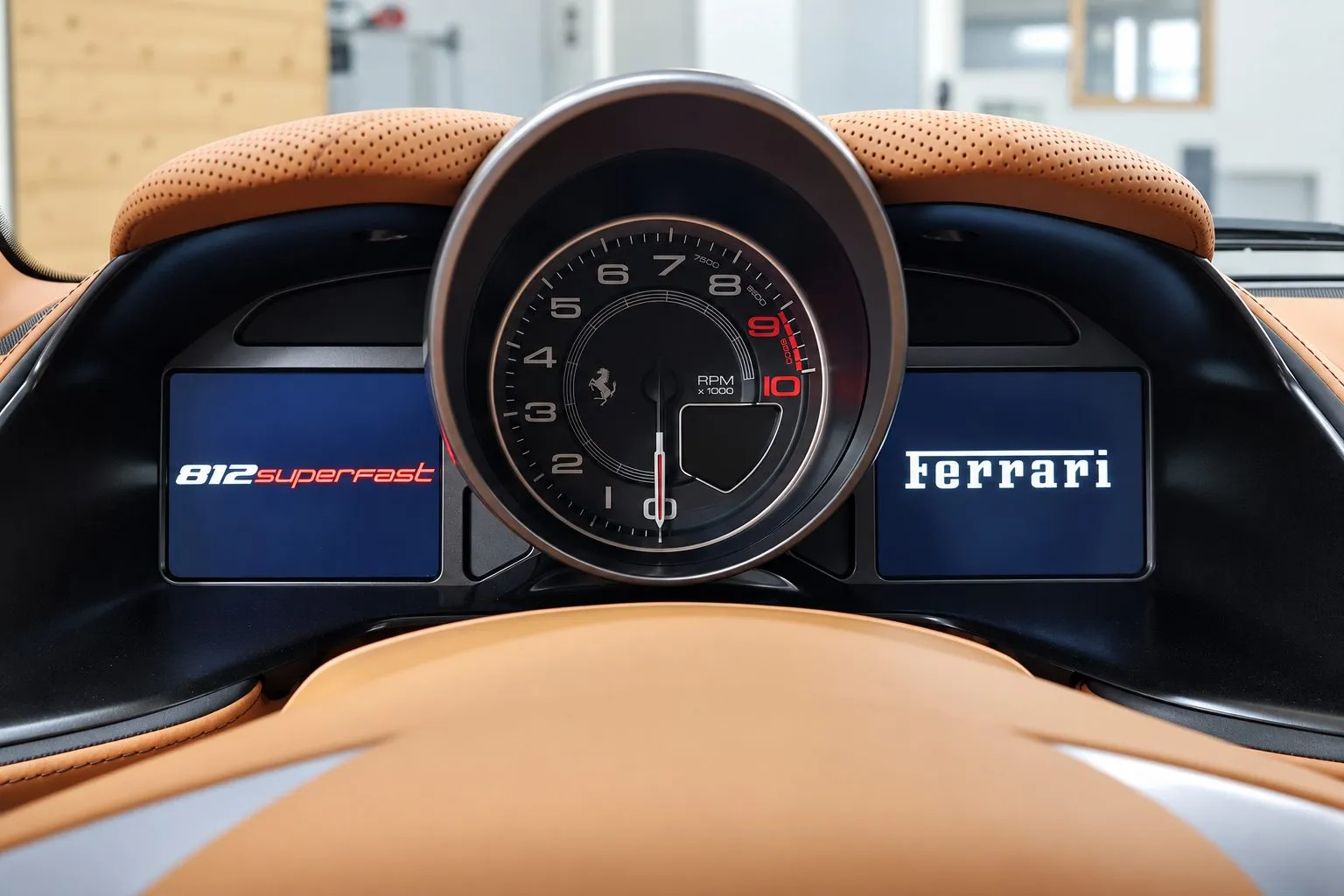
Interior
Material
Fabric, leatherand plastics
The material dictates the method. Fabric upholstery and carpets are first vacuumed, stains are pre-treated specifically and suitable surfaces are flushed through with the spray extraction machine; loosened dirt and moisture are vacuumed back out. Cleaner residues in fabric attract new dirt, so the cleaner is rinsed out with clean water, in several passes with the wet vacuum where soiling is heavy.
With leather we first determine the type and condition and match cleaning, care and protection to it. Abrasion or damaged colour is a separate matter; here a leather repair may make sense. Plastics and controls are cleaned in a way suited to the material; on sensitive surfaces and electronics we work with carefully dosed moisture. Sticky plastic coatings need separate refurbishment.
Soiling that goes through an insurance policy, such as a drink spilled in someone else's vehicle, is described under Insurance claims.
vacuum, pre-treat, spray extraction, rinse with clean water
determine type and condition, then match cleaning, care and protection
carefully dosed moisture on electronics and sensitive surfaces
Headlining, bonded areas and electronics are never soaked indiscriminately
Cleaners
pH value anddosage
Grease, drink residues, chocolate and other stains need different cleaners. We match active ingredients, pH value and dosage to the soiling and the material, test colour fastness first and carefully remove loosened residues. A fabric cleaner that does not suit the fabric and the type of soiling achieves little.
We do not use compressed air guns. Success depends on the right cleaner and on the technical aids that support it, not on pressure. On the Audi Q3 from our archive, whose fabric seats were covered in chocolate and spilled liquids, a special insect and dirt remover helped on the rubber inserts.
- Active ingredient, pH value and dosage matched to soiling and material
- Test colour fastness before a cleaner touches the surface
- No compressed air gun, no indiscriminate wet cleaning
Fabric protection
Protection aftercleaning
As a complement to cleaning, we can treat suitable fabric carpets with a fabric protection that makes them water-repellent. The treatment is applied to the cleaned, dry carpet; we check the suitability of the material beforehand. Used in our practical example: GYEON FabricCoat.
Two workshop videos show the difference. On the untreated fabric the water soaks in (20 seconds); on the treated fabric it remains visibly standing in droplets on the surface (33 seconds). The beading effect gives you more time to soak up spilled liquid before it penetrates deeper.
Water-repellent does not mean waterproof. Please still soak up liquids promptly. The result shown applies to this water test; other liquids, contact time, use and cleaning can affect the protective effect. Fabric protection does not replace regular care.
- Only on cleaned, dry fabric and only after a suitability check
- Practical example with GYEON FabricCoat, documented in two videos
- Water-repellent, not waterproof
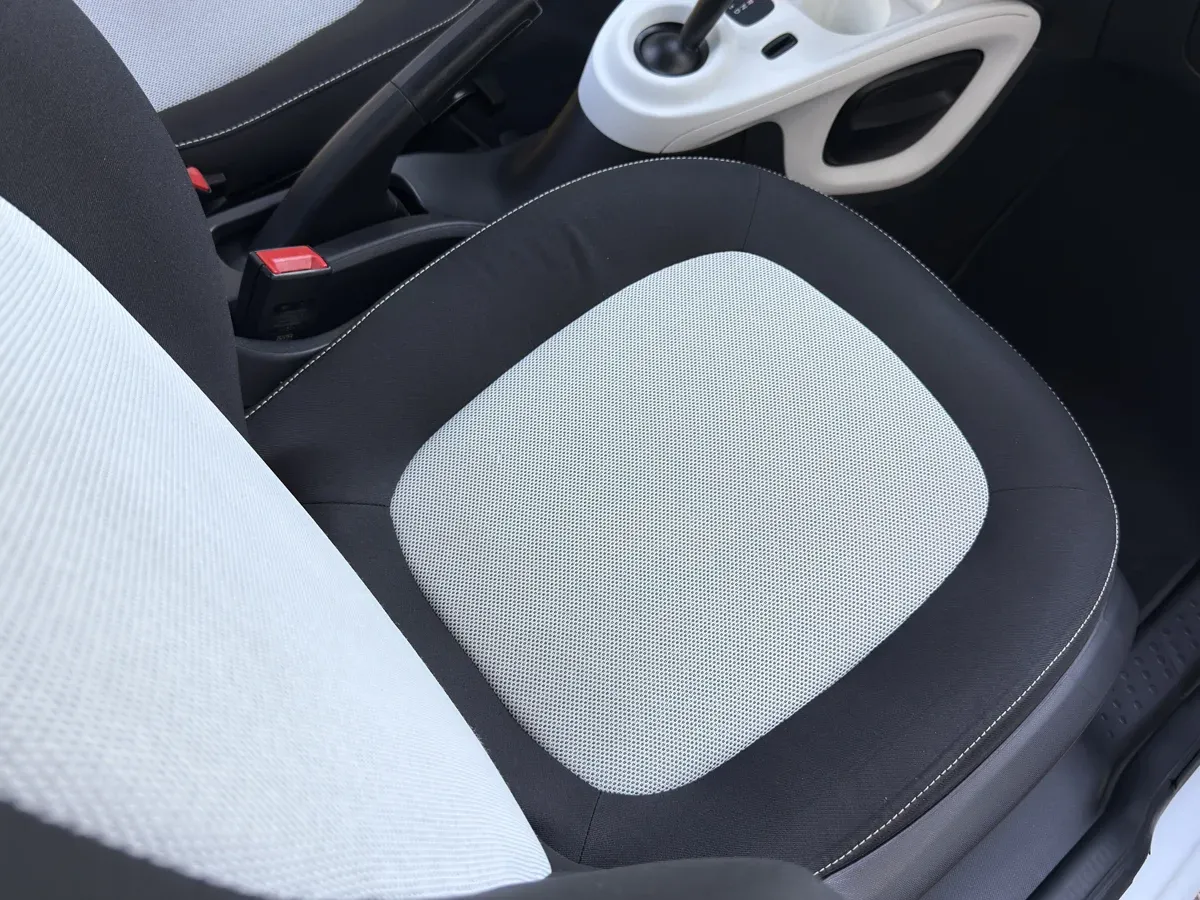
Before and after
Upholsterygereinigt
Drag the slider across the image. Fabric seat of a Smart before and after upholstery cleaning.

Fabric sealant
Without and withsealant
The same floor mat, the same amount of water. On the left it soaks in, on the right it beads off. Both clips start at the same time.
Mould
Findingthe cause
A musty smell, damp carpets or visible growth deserve close investigation. Leaking seals, blocked water drains and moisture carried in encourage damp inside the vehicle; it also collects under carpets or in insulation materials. Seasonal vehicles and long periods of standing need particular attention: in our workshop experience, under unfavourable storage conditions mould can cover an entire vehicle within 14 days.
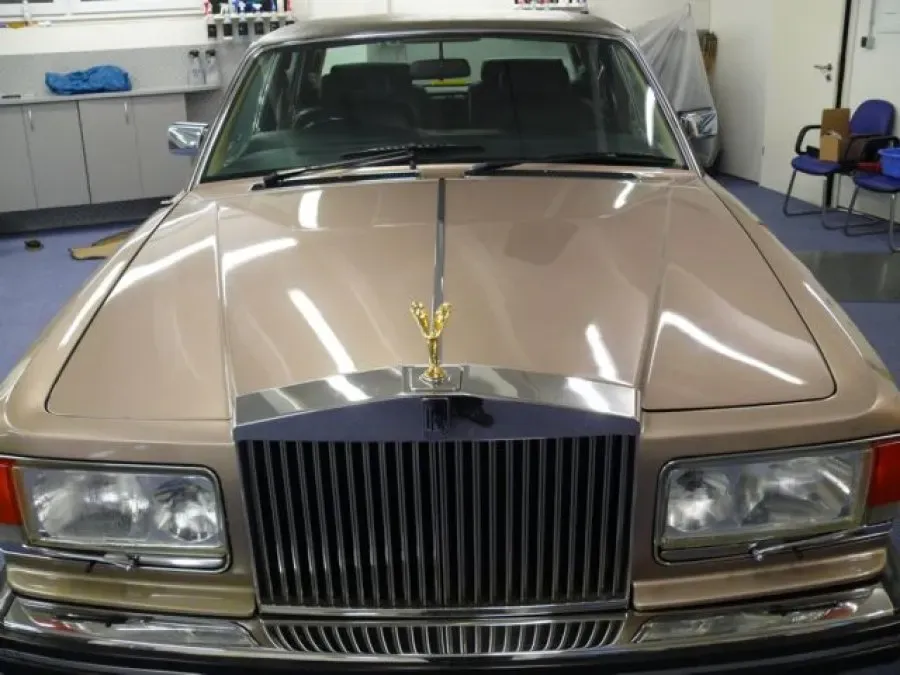
Where there is a technical defect, fixing the cause belongs in the appropriate specialist workshop. Cleaning alone does not fix a leaking window or a damaged drain. On the Rolls-Royce Silver Spirit from our archive, mould appeared on the leather piping and the boot trim; a seal that had become brittle was the possible cause, and without this check all the disinfection work would have been in vain. Inspection, repair of the cause and reconditioning have to be coordinated.
- Check seals, water drains and water ingress
- Include hidden damp under carpets and in insulation materials
- Technical causes belong in the specialist workshop, the reconditioning with us
Mould removal
How we proceedwhen mould is present
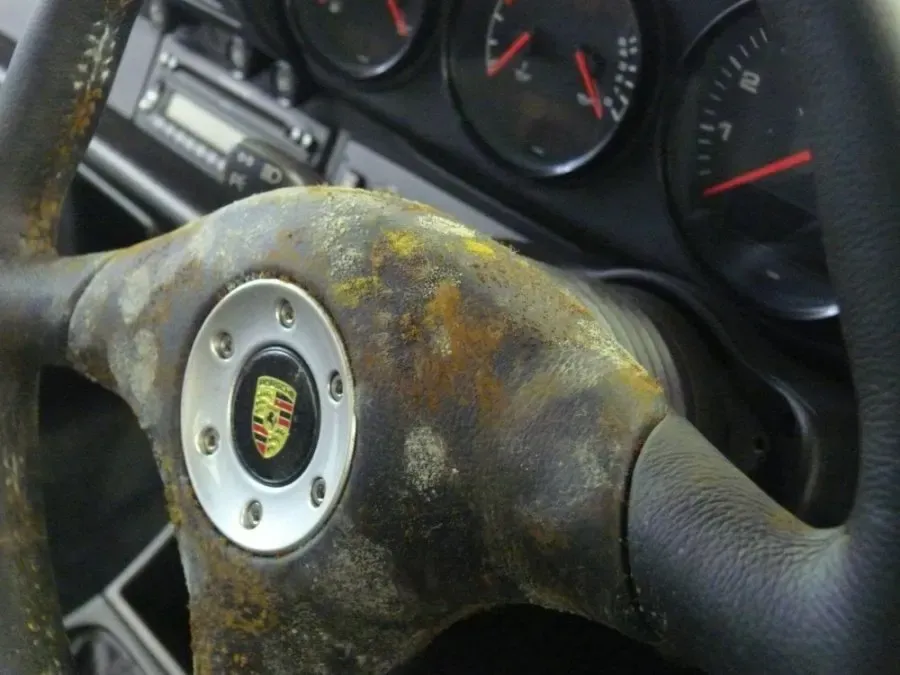
We look at the extent and the affected surfaces. Trim panels, leather, textiles and absorbent underlays need different treatment, and hidden damp can make dismantling necessary. Wearing protective clothing, we dismantle the interior as far as necessary and disinfect everything accessible by hand in several stages. On the Porsche 993 GT2 it only became apparent during dismantling that the leather was two-tone; the mould had covered it completely.
Chemical treatment or simply killing the mould does not replace removing the mould components. Household products based on chlorine or hydrogen peroxide bleach and damage fabrics, leather, synthetic leather, plastics and rubber; we work with methods and products suited to the respective material. On the Audi Sport Quattro from our archive, we tackled odour-forming bacteria with active bacterial cultures and finally fumigated the entire interior.
Whether a material can sensibly be cleaned or has to be replaced depends on its condition. On the 993 GT2 the leather had to be completely re-pigmented after disinfection. Which dismantling, cleaning or further investigation makes sense and how long it takes is agreed on the basis of the specific infestation.
- Protective clothing, dismantling as far as necessary, manual disinfection in several stages
- No household products containing chlorine or hydrogen peroxide on leather, fabric and plastic
- Materials cleaned, reconditioned or replaced depending on their condition
If you suspect mould
What you shoulddo now
Please contact us before bringing the vehicle in and describe visible spots, odour, damp and possible water ingress. Do not brush suspicious deposits while dry and do not treat them with unsuitable products. If you have symptoms or are particularly sensitive, medical advice is sensible; vehicle detailing does not replace a medical assessment.
After the work, dry materials and checking for renewed water ingress remain important. A photo, a smell or a single reading is not a statement about the health safety of the whole vehicle.
Call before bringing the vehicle in and describe the infestation
Do not brush deposits while dry
keep dry and watch for new damp
Procedure
Four stepsin the interior
Every interior clean starts with a look at the materials, not with the cleaner.
- 01Inspection and material check
We form a first impression from photos and a short description. In the workshop we check the material and colour fastness and decide on the method. If you suspect mould, please call before bringing the vehicle in.
- 02Loosen and pre-treat
Loose dirt is vacuumed and removed. Stains are pre-treated specifically with the cleaner that suits the soiling and the material.
- 03Clean and extract
Spray extraction on suitable fabric surfaces, carefully dosed moisture on electronics and sensitive surfaces, leather and plastic according to condition. Headlining, bonded areas and electronics are never soaked indiscriminately.
- 04Dry and check
We let the treated surfaces dry sufficiently, check the result and agree the collection time with you. On request, fabric protection follows on the dry carpet.
Questions and answers
What customers wantto know beforehand
Which stains can be removed?
Most soiling can be significantly reduced or removed completely. Permanent discolouration, damaged fibres or worn leather colour are a matter for repair or refurbishment; we assess the condition and discuss with you what is realistic.
When can I use the car again?
As soon as the treated surfaces are dry. How long that takes depends on the scope of the cleaning and the material, particularly after wet cleaning. We agree the collection time with you individually.
What can be done about odours?
In many cases odours can be significantly reduced. We look for the cause and clean the affected areas. If the cause sits deeper in the upholstery or there is a damp problem, we plan the further effort with you.
Is the fabric protection waterproof?
No, it is water-repellent. Water stands in droplets on the treated fabric for a while, which gives you more time to soak it up. Other liquids, contact time, use and cleaning can affect the protective effect, so please still wipe up promptly.
Is a musty smell always mould?
No. Odour can have various causes. Damp, visible changes and affected materials have to be examined together.
Is it enough to remove the smell?
No. A pleasant smell does not prove that the cause of the damp has been fixed or that affected material has been adequately treated. On the Rolls-Royce Silver Spirit from our archive, household remedies worked only briefly before the musty smell returned.
Does every interior have to be completely dismantled?
No, the scope depends on the infestation and the affected components. Hidden areas can make dismantling necessary; we do not promise complete dismantling for every vehicle.
When is a laboratory test sensible?
When a specific question needs answering. Visible growth, cause and material condition are the important starting points; whether samples make sense is something we assess professionally. Our before-and-after photos document the visible condition; a health clearance is a separate step.
Can I just bring the vehicle in if it has mould?
No, if you see or suspect mould, please call first. Describe the extent, the damp and the condition of the vehicle so that we can coordinate the inspection and delivery.
Can new mould be ruled out?
No. If moisture gets in again or materials stay damp, the problem can return. Fixing the cause, drying and ongoing checks therefore belong together.
Questions from the workshop, answered briefly. Your question is missing? 07195 135464
Projects
From the archive

Interior
Get in touch
Tell us about your vehicle and what you need, ideally with three photos. We will get back to you with a first assessment.
Opening hours
- Monday to Friday
- 08:00 to 18:00
- Saturday
- 09:00 to 14:00
Appointments outside opening hours by arrangement.