
Leather repair
Assessment
Assess first,then repair
Not every mark in leather is the same kind of damage. Before a repair we distinguish natural features, signs of use and patina from damage to the finish and changes in the leather substance. Material type, finish and use determine how a surface can be assessed and sensibly treated. Special features such as infrared-reflecting pigmentation also have to be taken into account.
In 2014, the Research Institute of Leather and Plastic Sheeting from Freiberg, today FILK Freiberg Institute gGmbH, visited our leather workshop. Following this professional exchange, we were admitted as a repair business to the institute's assessment catalogue. The catalogue is a working tool for assessing leather and synthetic leather in vehicle interiors and is aimed at, among others, workshop foremen, service advisers, complaints handlers and assessors.
For context: admission to the catalogue is not a current certification and not a general approval of all repairs by the institute. What remains decisive for your vehicle is a verifiable assessment of its present condition on the material. You can find the full retrospective in our technical report on the FILK assessment catalogue.
Types of damage
What can berepaired
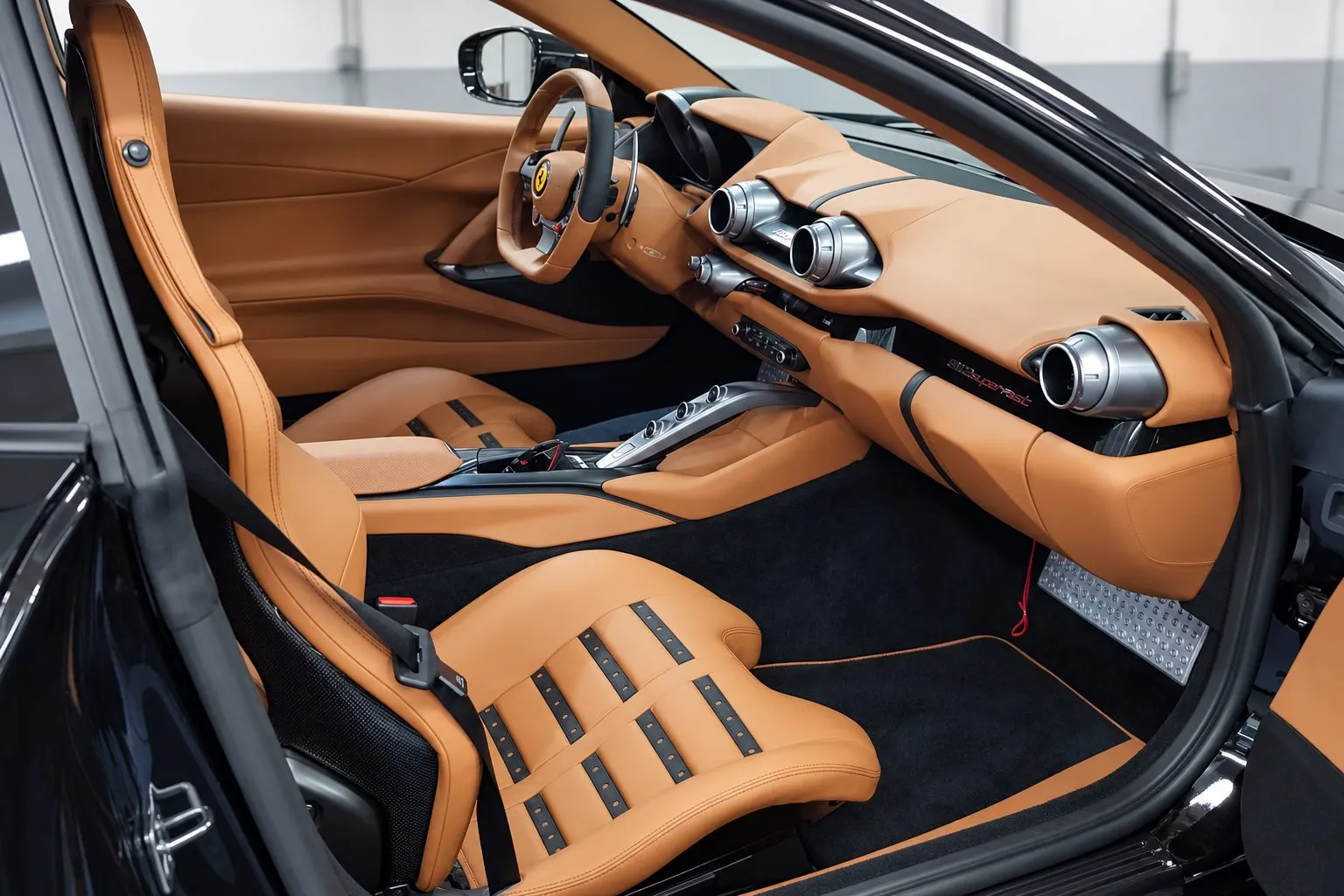
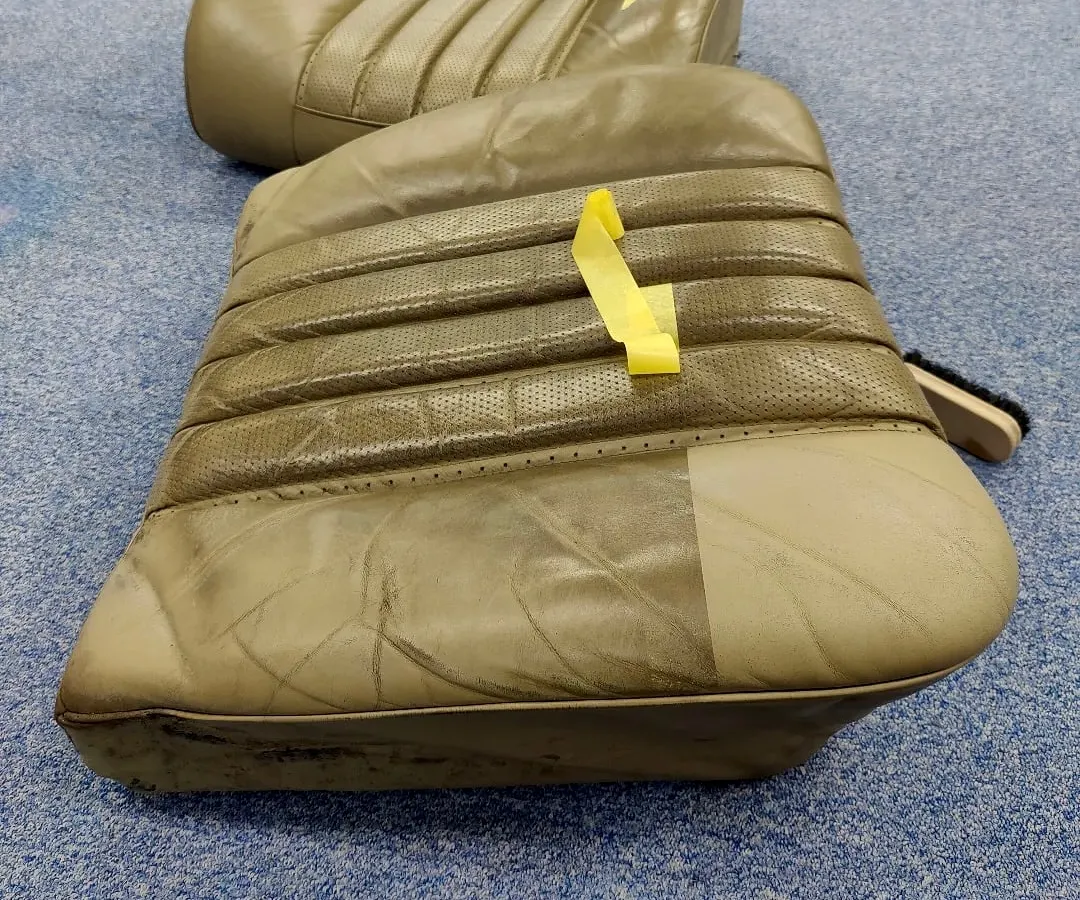
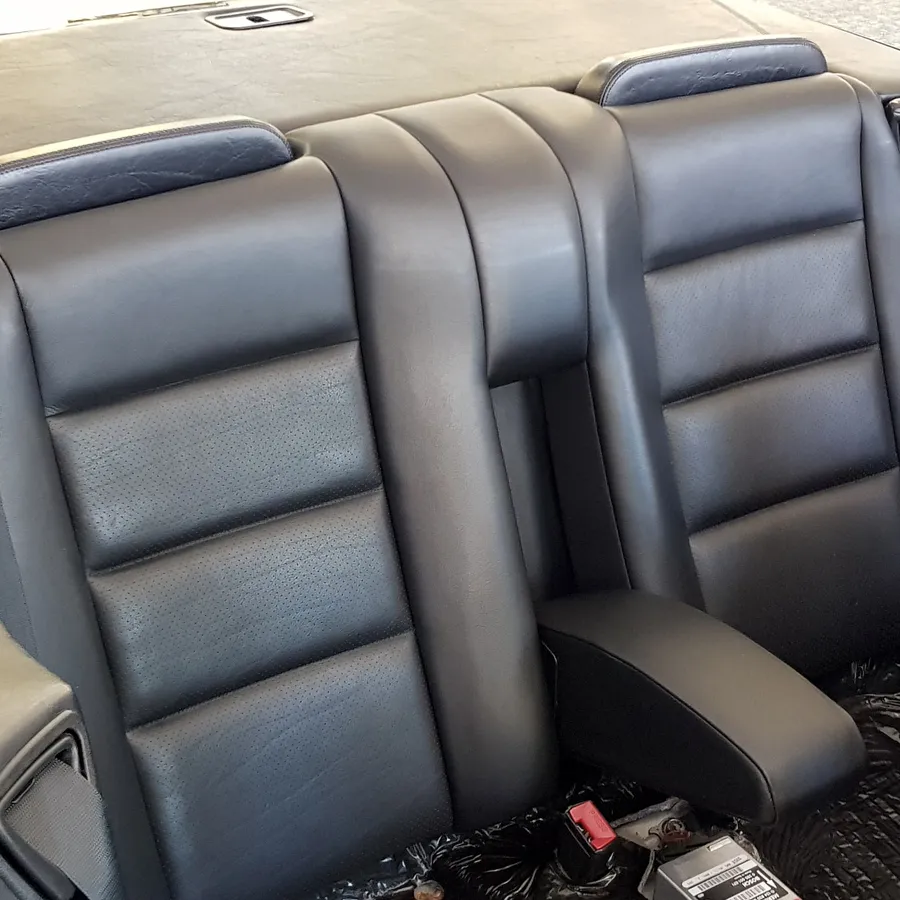
Our work covers signs of use, colour abrasion, faded areas, stains, scratches and suitable surface cracks. Holes and more severe damage may also be repairable, depending on the condition of the leather. Damage to the side bolsters and leather door tops is typical of low sports cars, because getting in and out with shoes, rivets, zips or other hard items on clothing leaves marks. Small areas of wear on side bolsters should be repaired as early as possible: once the damage is extensive, often only upholstery work remains, and that is more expensive.
With structurally weakened or heavily hardened leather, we first check whether a repair is sound. Odours and traces of mould call for an assessment of the cause and of all the affected material. A new colour layer alone does not solve such problems.
If a repair does not make sense, we discuss with you the alternative of partial replacement or upholstery work. We have a master upholsterer for this. Damage from an insurance claim, such as a burn hole in a seat or damaged furniture leather, is described under Insurance claims.
Signs of use, colour abrasion and faded areas
Stains and scratches
Suitable surface cracks, holes and more severe damage depending on the condition of the leather
Weakened substance, hardened leather, odour and mould: check the cause and soundness first

Working the leather
Clean, repair,rebuild colour
Reconditioning begins with cleaning and degreasing suited to the leather. We then treat repairable unevenness and prepare the surface for the further build-up. The steps of degreasing, adhesion promoter, leather filler and final fixative are quickly listed, but every area has to be mixed and worked precisely so that the repair holds, the surface matches the rest of the leather and the abrasion resistance stands up to the stresses.
For colour matching we refer to a protected original area or an agreed sample. We mix the leather colour pigments individually in our workshop. Fine colour applications and a suitable surface finish determine the shade, gloss level and feel. Not every type of leather is suited to the same build-up.
- Cleaning and degreasing suited to the type of leather
- Repair of unevenness, adhesion promoter and leather filler
- Colour pigments mixed individually in the workshop
- Final fixative for gloss level, feel and abrasion resistance
Before and after
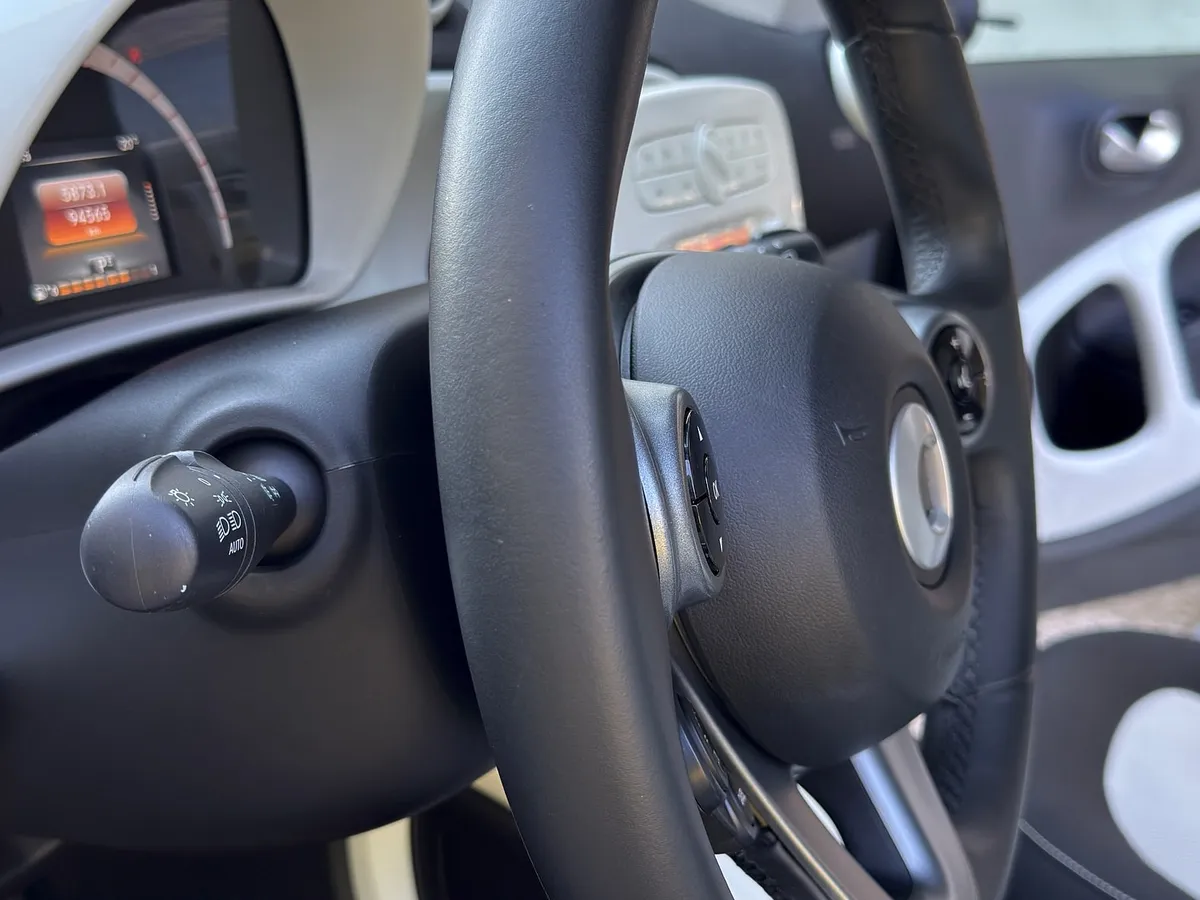
Steering wheeland Alcantara
Real pairs from the workshop. Drag the slider across the image.


Preserve the original,do not replace it.
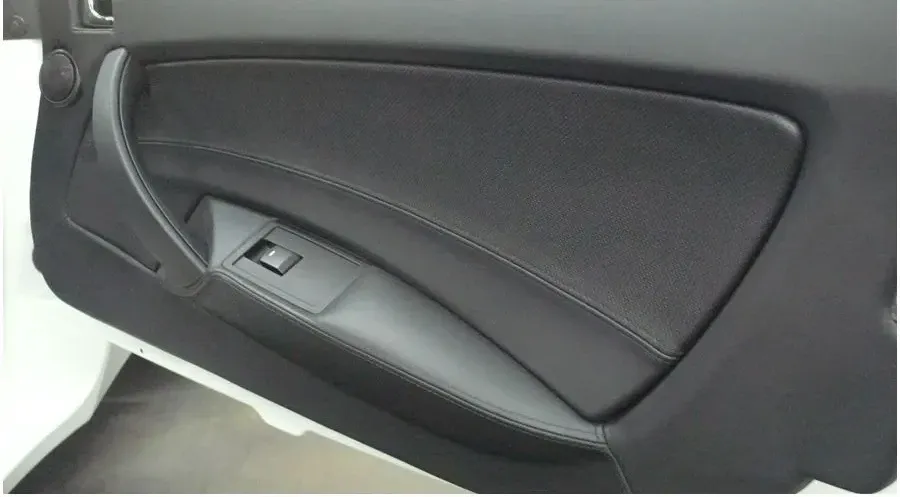
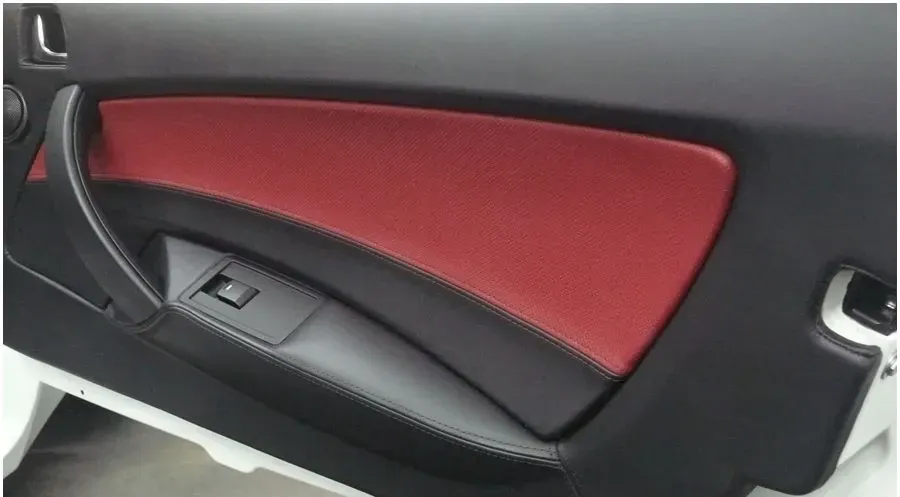
Recolouring
New colour onexisting leather
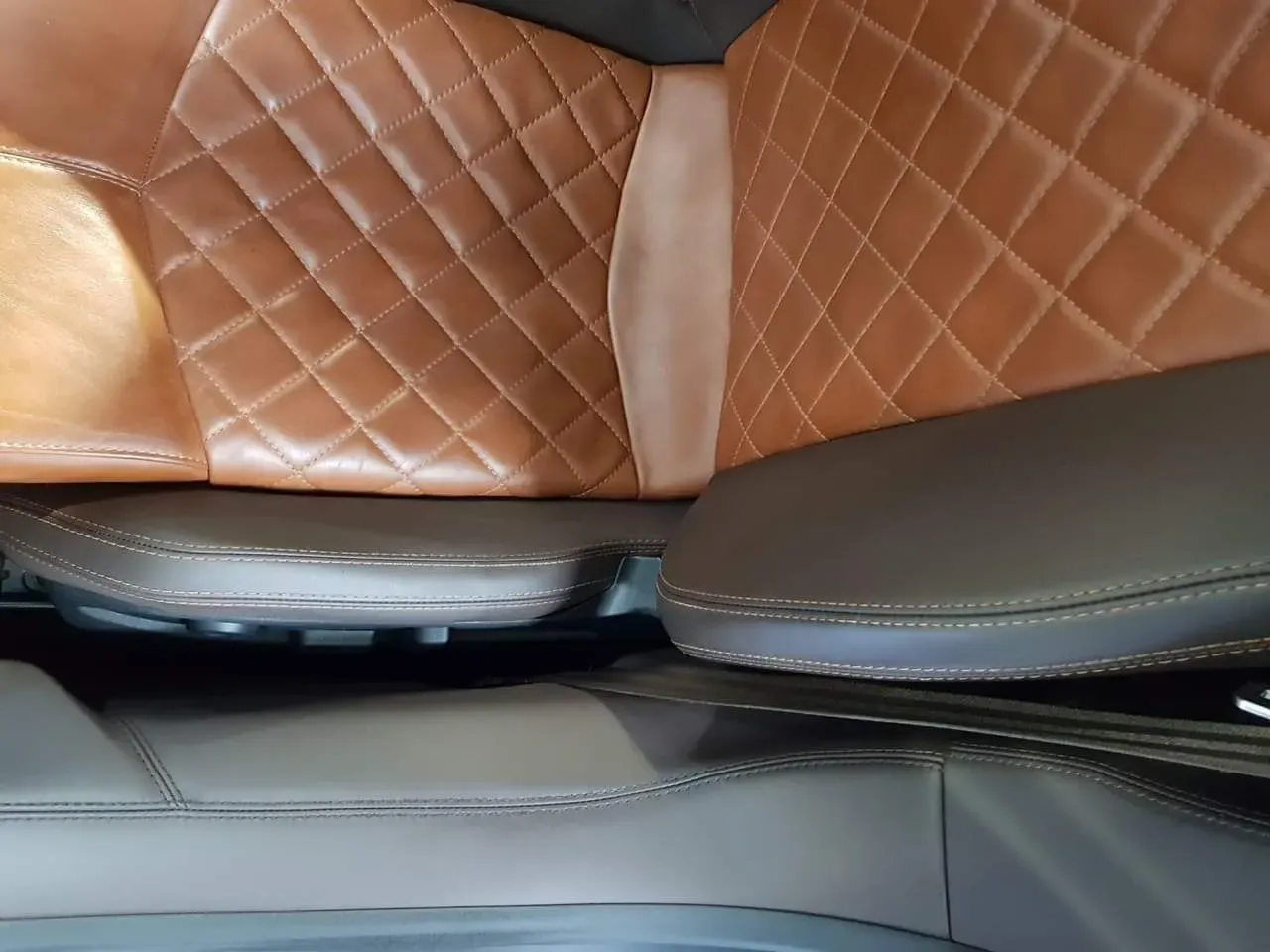
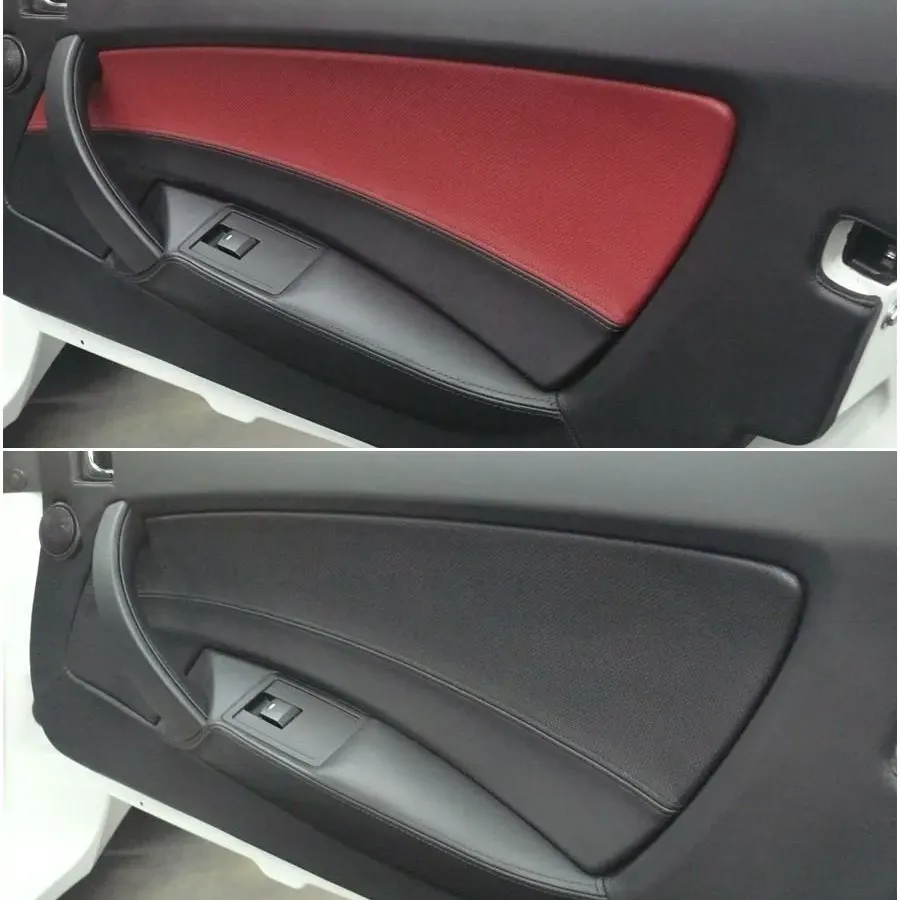
Recolouring can be an alternative to complete replacement, for example when a colour combination is no longer to your taste or a used car with a striking leather colour is hard to sell. A documented example is a Tesla Sport Roadster whose red leather interior was re-pigmented to black.
Beforehand we check the material and finish and agree a colour sample with you. With classics, the question of whether the original colour scheme should be preserved is also part of the discussion. Photos give an initial orientation; the definitive assessment is made on the material.
From the workshop
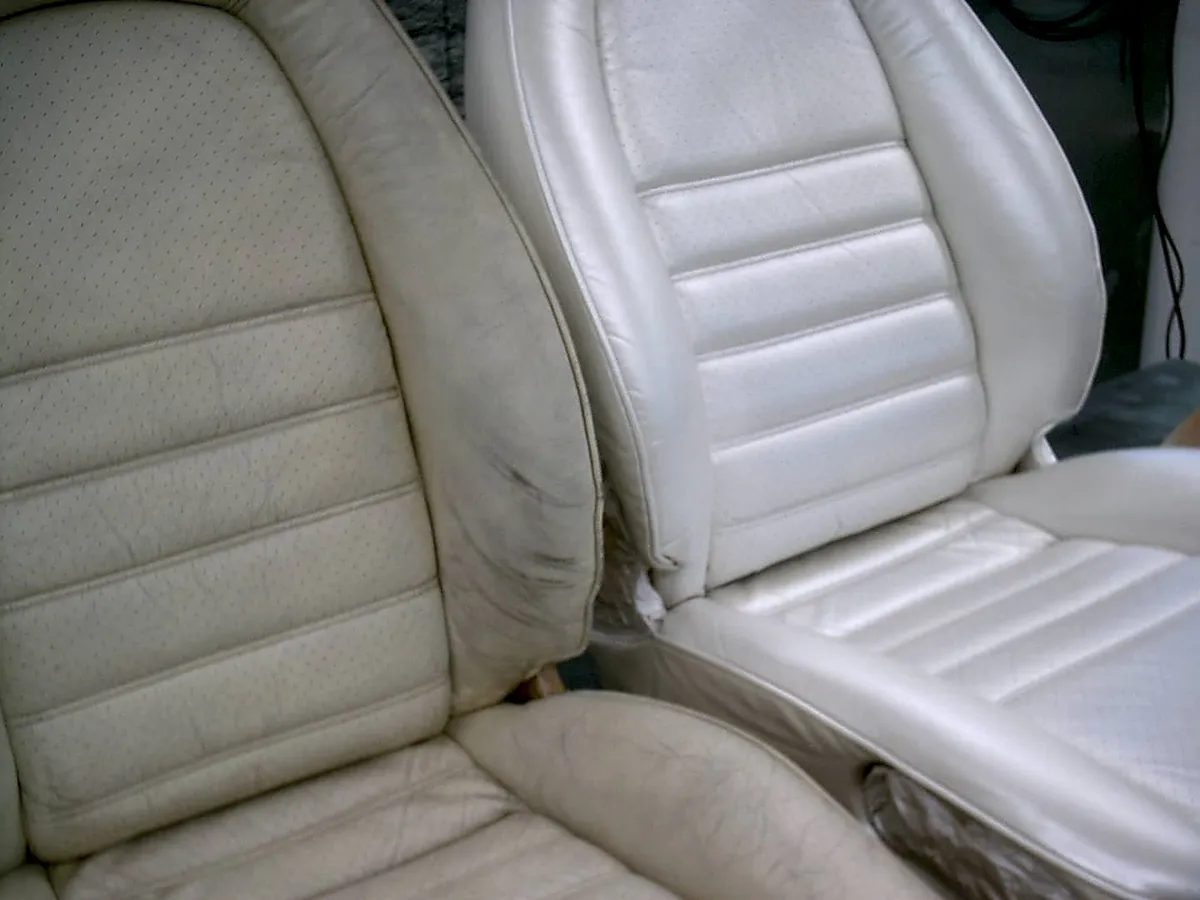
Recolouring and upholstery work
Special equipment
COOL leather andsun reflective leather
Leather with infrared-reflecting pigments may heat up less in the sun. Manufacturers use different names for this, such as SunReflective Technology, heat-up protection, IR leather or COOL leather. We establish whether your vehicle is equipped with it from the specification and the material.
An unsuitable colour coating can impair this function. The special finish therefore has to be taken into account during cleaning and repair; technical leathers of this kind can also be reworked by us. Use only care products approved for your specification. Conventional leather does not automatically become technically equivalent COOL leather simply by being recoloured.
AUTO BILD Sportscars reported on the special pigmentation of COOL leather and its repair in issue 11/2009. Another archived AUTO BILD article covers car leather care and repair options for COOL leather. Both reports are historical and are held in our press archive.
Furniture too
Also outsidethe vehicle
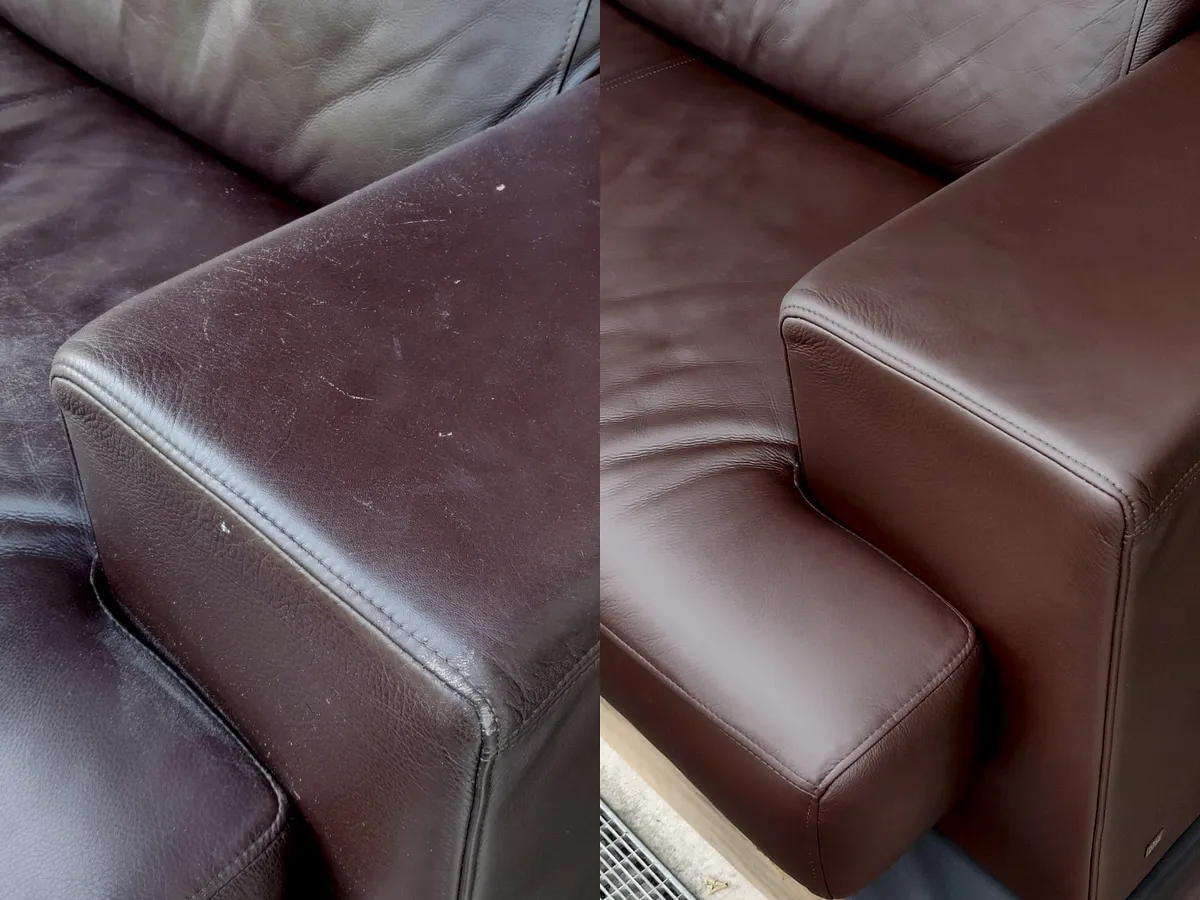
Our leather service also covers armchairs, sofas, dining chairs and conference chairs. Whether reworking is economically and technically worthwhile is something we assess on the individual piece. Send us an overview and detailed photos for an initial assessment.
Durability and care
So that the resultbleibt
To keep leather supple, it should be cleaned and conditioned at least twice a year in closed vehicles. For convertibles we recommend four care sessions a year, because heat and UV radiation leach the leather. A common misconception: leather that is not used, such as the rear seats, needs no care. It needs the same care as the surfaces in use.
After the work we give you care instructions for your interior. For COOL leather: use only products approved for this specification.
Procedure
Four stepswith leather
Every leather job starts with the material and ends with care instructions for your interior.
- 01Establish leather type, specification and damage
We inspect material, finish and damage on the vehicle or piece of furniture. Photos give an initial orientation beforehand; the definitive assessment is made on the material. We also establish whether it is COOL leather or another technical specification.
- 02Agree the scope of cleaning and repair
Based on the assessment, we discuss with you what can be repaired, where the substance sets limits and whether partial replacement or upholstery work is the better solution.
- 03Match colour, surface and matt level
The shade is matched to a protected original area or a sample and mixed in the workshop. Cleaning, degreasing, adhesion promoter, leather filler, colour applications and final fixative follow step by step.
- 04Provide care instructions for the treated interior
At handover you receive instructions on correct ongoing care, matched to your type of leather. Special rules apply to COOL leather.
Questions and answers
What customers wantto know beforehand
Is the original leather retained?
Yes, if the substance allows reconditioning. We then work on the existing leather. Heavily weakened areas may require partial replacement or upholstery work; we discuss that with you beforehand.
Can every colour be matched exactly?
Not in every case down to the last detail. We match the shade to a sample or a protected original area and mix the pigments in the workshop. Ageing, light and different surfaces can affect how the colour is perceived.
Can leather be recoloured?
Yes, we re-pigment it. Beforehand we check the material and finish and agree a colour sample. With classics we also clarify whether the original colour scheme should be preserved.
Do you also work on leather sofas and armchairs?
Yes. Besides vehicle interiors, armchairs, sofas, dining chairs and conference chairs are part of our work. Send us an overview and detailed photos for an initial assessment.
What matters with COOL leather?
The infrared-reflecting pigmentation has to be taken into account in the repair build-up. Unsuitable colour coatings or care products can cover it. Let us know the vehicle specification and any products already used.
Is a photo enough for an assessment?
For an initial orientation, yes. The definitive assessment is made on the material, because leather type, finish and the condition of the substance cannot be reliably identified from photos.
What do you do about odour or mould in leather?
First we look for the cause and assess all the affected material. Only once cause and substance are clarified do we rebuild the leather.
How often should vehicle leather be cared for?
At least twice a year in closed vehicles, four times in convertibles. Heat and UV radiation leach the leather. This also applies to seats that are rarely used.
Is Autoblitz Mayer certified by FILK?
No. Admission to the assessment catalogue is not a certification. Following the professional exchange in 2014, we were admitted as a repair business to the assessment catalogue of FILK Freiberg. That is a documented retrospective, not a general approval of all repairs by the institute.
Do you have an upholsterer?
Yes, a master upholsterer is part of the team. If a repair no longer makes sense, partial replacement or upholstery work can be carried out directly by us.
Questions from the workshop, answered briefly. Your question is missing? 07195 135464
Projects
From the archive

Leather repair
Get in touch
Tell us about your vehicle and what you need, ideally with three photos. We will get back to you with a first assessment.
Opening hours
- Monday to Friday
- 08:00 to 18:00
- Saturday
- 09:00 to 14:00
Appointments outside opening hours by arrangement.