

Classic cars
For vehicles that make history.
Assessment
First look,then touch
Originality, preserved patina and existing repairs determine which interventions make sense. We discuss with you which traces should remain and which damage can be treated. The aim is a coherent result, not a blanket “as new”.
On the Mercedes SL R 107 König conversion the brief was explicit: preserve the substance and do not change it. The colour differences in the interior that became visible after cleaning were deliberately left, because they are part of the vehicle's history. On the Bentley 6½ Litre Speed nothing was polished on the paint; the light patina stayed, and the paint was merely preserved.
History, previous work and earlier repaints are recorded before the first touch
You help decide which traces remain and which damage is treated
The limits of the method are named before we start, not afterwards
Paint
Reconditioninghistoric paint
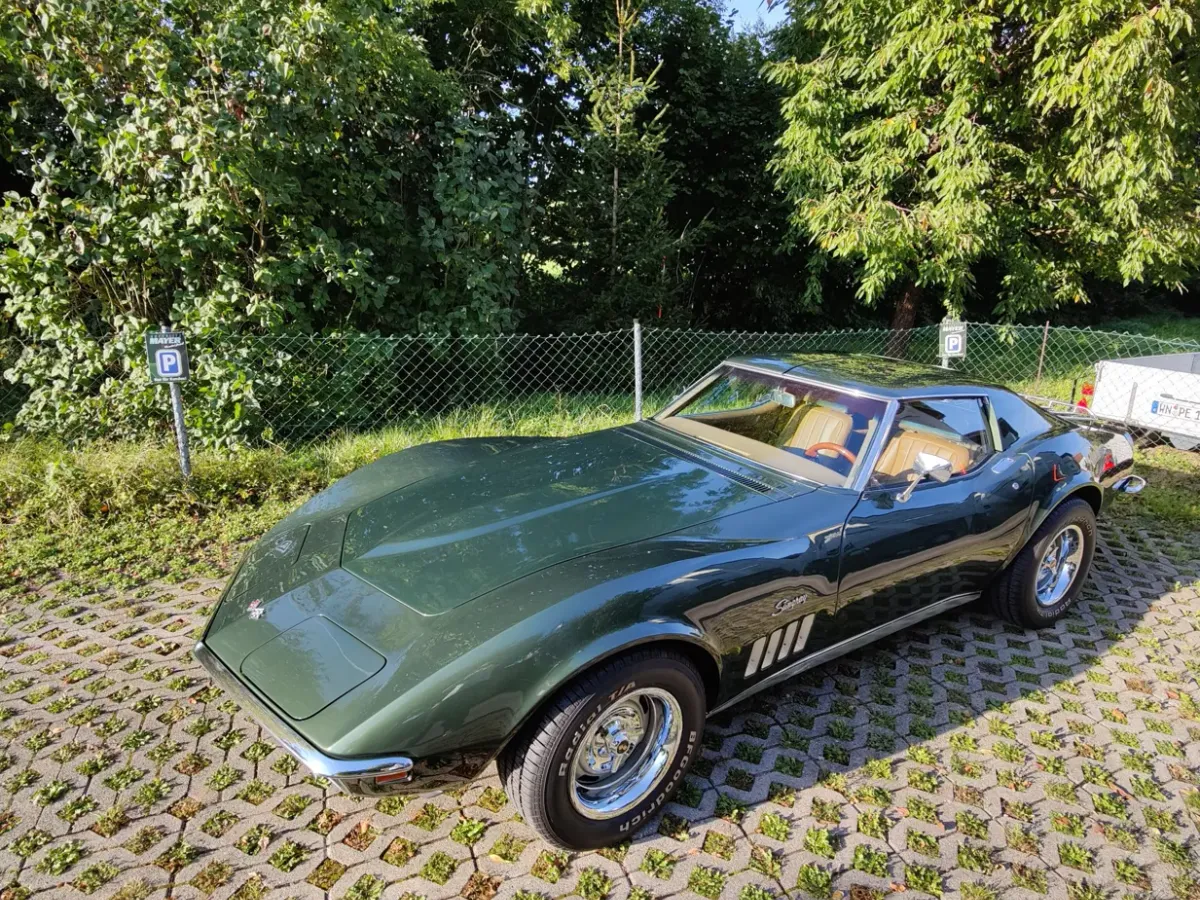
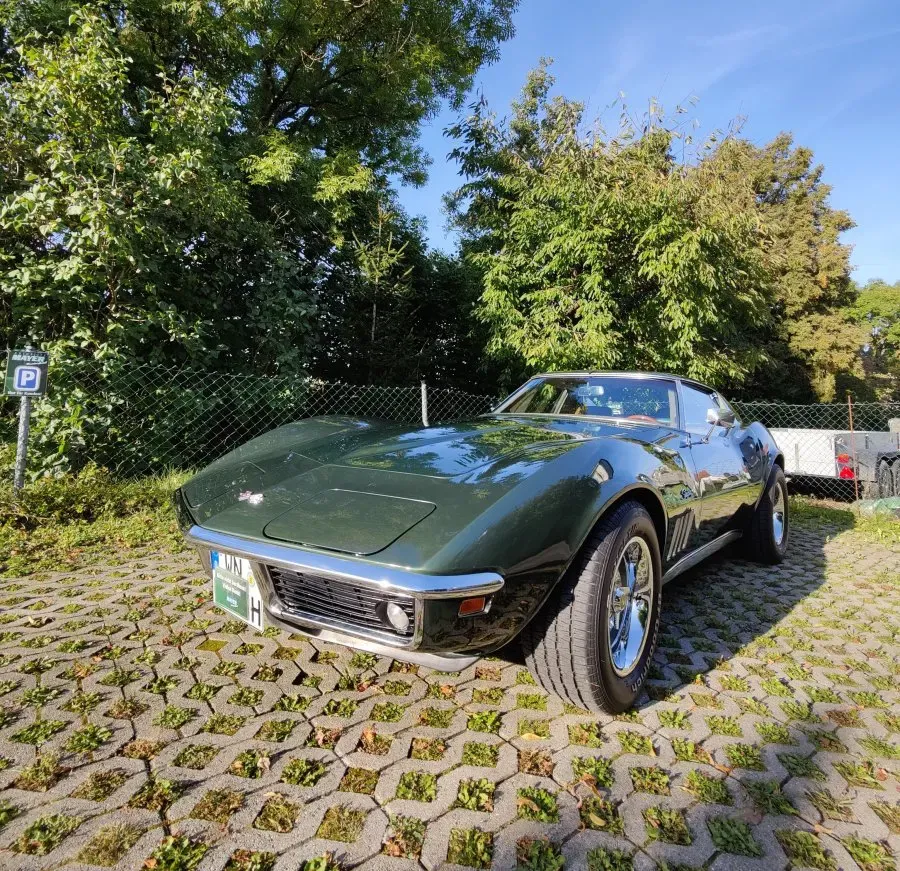
Age, paint structure and earlier repaints can vary greatly on a single vehicle. Model and model year alone do not determine the paint system present. Thermoplastic acrylic lacquer, as described in the project report on the Corvette Stingray C3, can react sensitively to heat and certain solvents. Cleaning and any polishing work are adjusted accordingly. Where paint reserves are limited, the substance takes priority over maximum scratch removal.
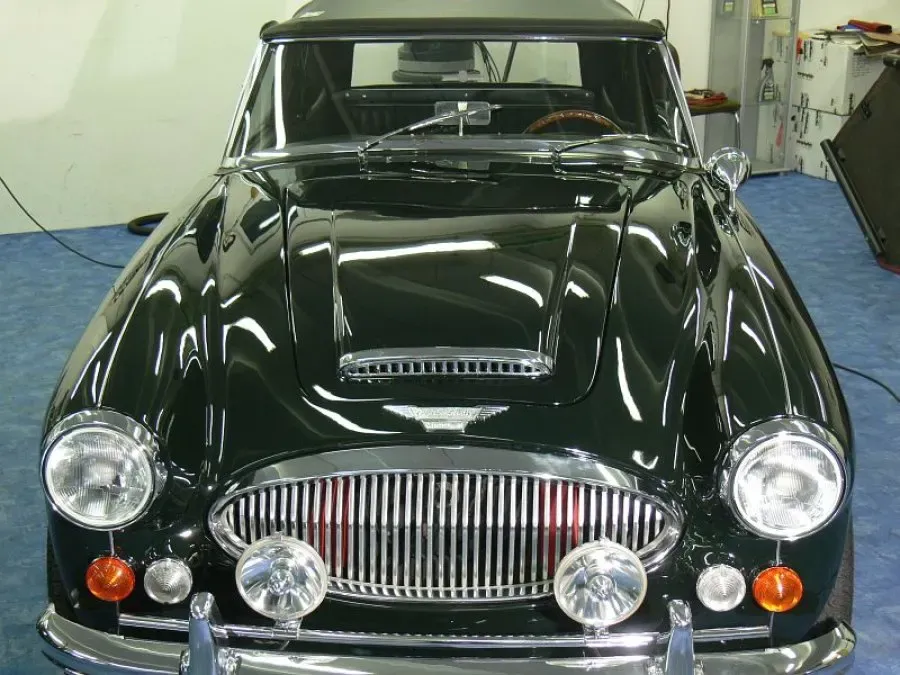
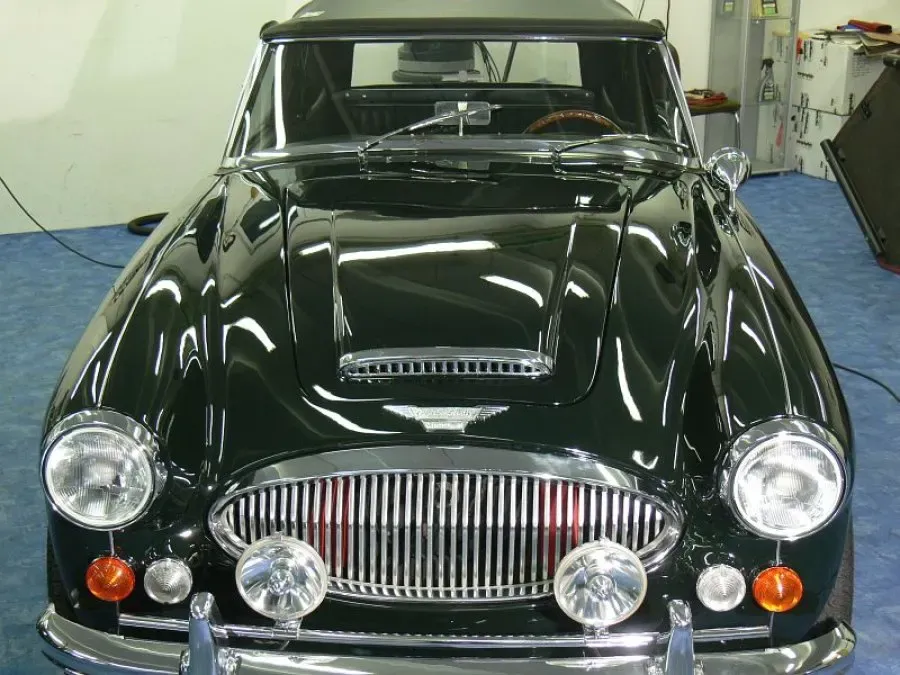
On the Austin-Healey 3000 in Rolls-Royce paint colour RR 9500687, the difficulties lay in removing water spots and polish residues from the chrome trim; paint chips on the bonnet and wheel arch had to be painted.
In the project reports of the time on the Corvette C3, the Austin-Healey and the Mercedes 290 Cabriolet C, the LZ 730 brilliance sealant is documented as paint protection after reconditioning. These details come from older reports. Which product suits the specific paint today is decided on the vehicle.
- Identify the existing paint before choosing products and methods
- Recondition gently, substance before scratch removal
- Choose protection to suit the specific paint and its condition
Cleaning
Hand washing fordelicate materials
Hand washing a pre-war vehicle is more laborious than on a modern vehicle, because everything is open and full of nooks. On the Bentley 6½ Litre Speed the wire wheels were among the most labour-intensive parts. On the 1934 Mercedes 290 Cabriolet C, chrome care including the wire wheels and manual engine cleaning are documented.
Rubber compounds, top coats, chrome and aluminium were often formulated differently or manufactured by different processes in the past and frequently react sensitively to chemicals. Experiments with off-the-shelf cleaners not infrequently end in damage. For removing flies on the Austin-Healey we therefore used a clinging foam: gentle, without pressure, and without rubber, chrome, aluminium or anodised surfaces tarnishing. Chrome rings, trim strips and rubber seals are carefully masked beforehand.
- Hand washing instead of high pressure on open, intricate bodies
- Chrome, aluminium, anodised surfaces and rubber are cleaned with products matched to them
- Trim parts and seals are masked before cleaning

Preserve the substance,do not over restore.
Interior
Leather, woodand soft top
Old leather seats and interiors can be cleaned, repaired and recoloured after assessment. On the Bentley 6½ Litre Speed all the leather straps were treated several times inside and out with leather cleaner and leather conditioning lotion, including the leaf springs wrapped in leather at the bottom. The passenger compartment and the tonneau cover were cleaned and protected so that water beads off better on the next drive in the rain.
On the Mercedes SL R 107 König conversion, a great deal of dirt had worked its way into the synthetic leather over 36 years. The material was in good condition and no repair was needed; cleaning was carried out with a gentle leather care set. For the work on the cockpit the windscreen had to be removed and refitted, which with an old screen means a risk of breakage. On the Mercedes 290 Cabriolet C, cleaning and reconditioning of the soft top as well as interior and wood care are documented.
With plastic parts we check whether the existing component can be preserved. Adjacent materials and trim parts are also included in the scope of work.
- Leather and synthetic leather are first cleaned, then assessed, then repaired if necessary
- Soft top, tonneau cover and fabrics can be given fabric protection
- Wood, chrome and trim parts are part of the scope of work
Protection
Coating and filmon a classic
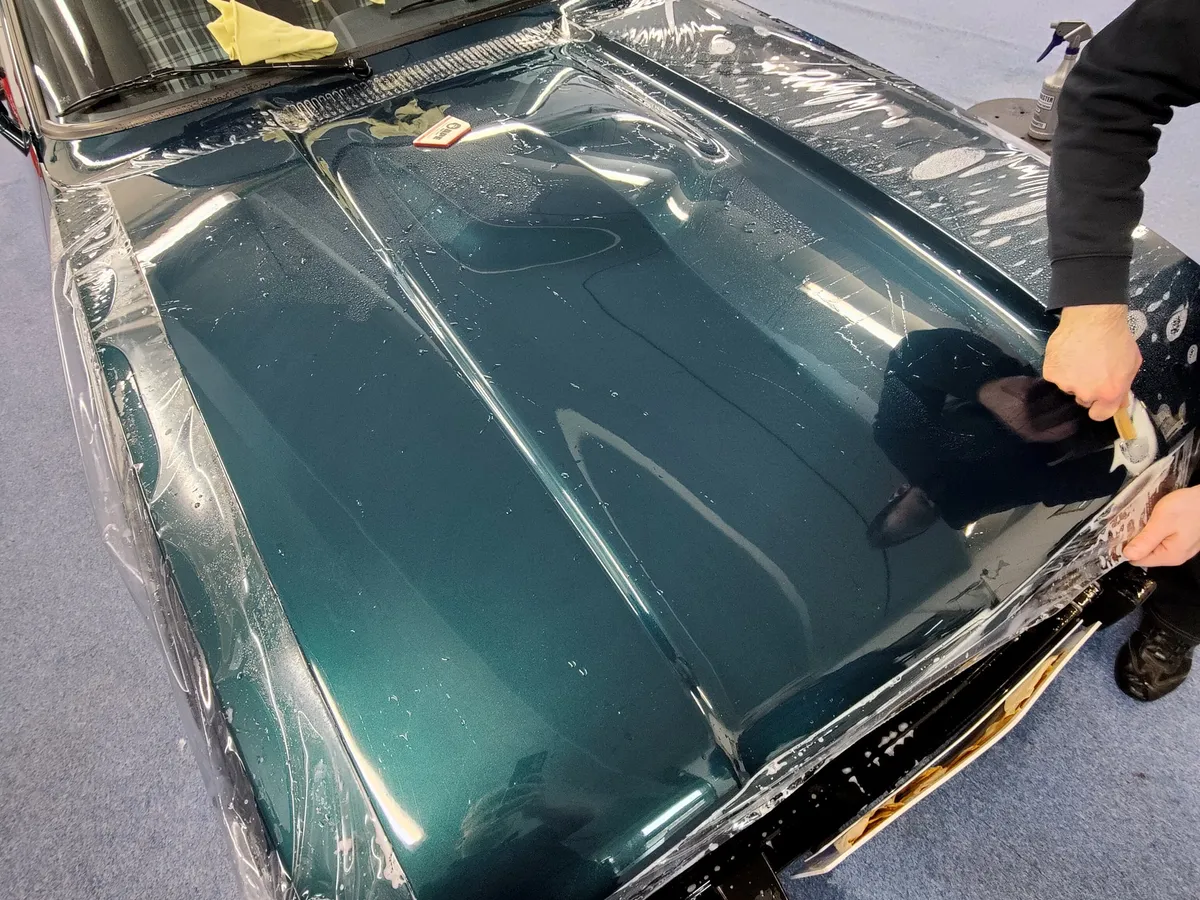
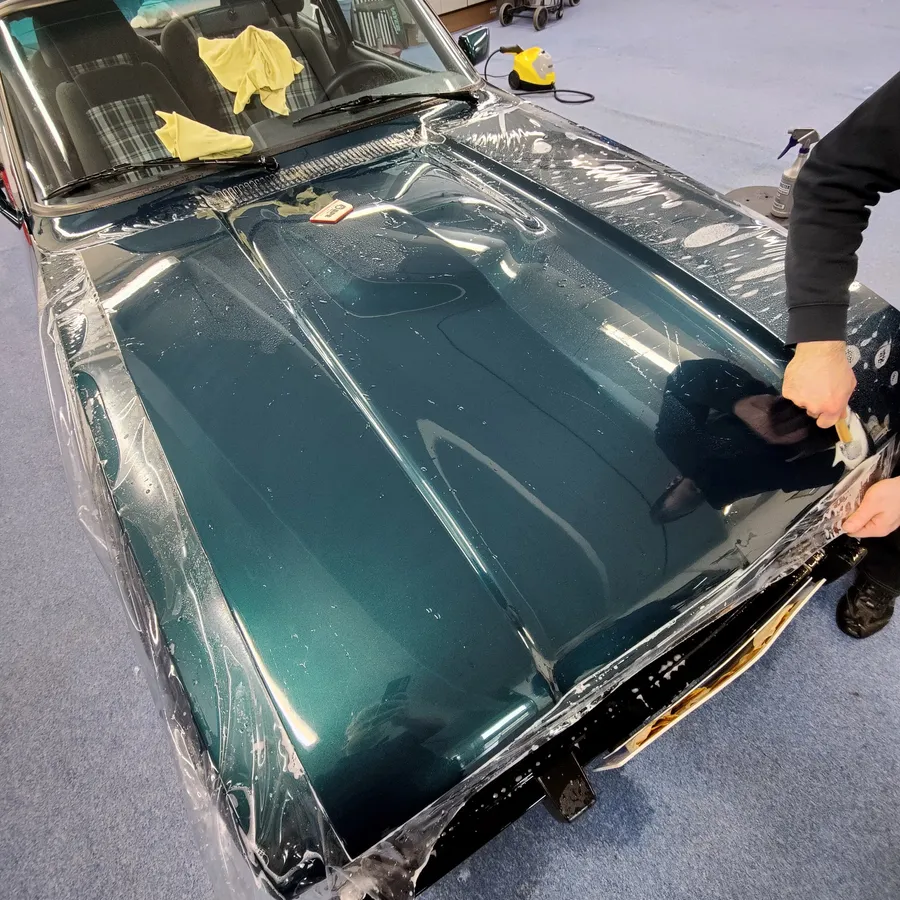
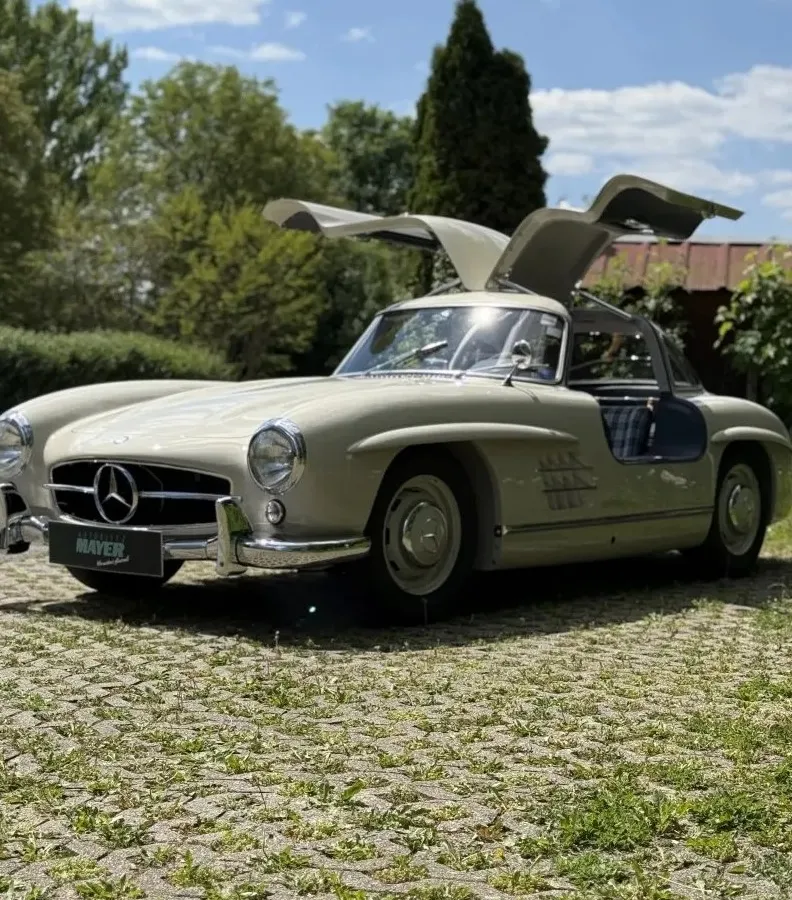
A coating or a suitable film can make sense depending on use. A Ford Capri from our workshop, for example, received paint protection film on the bonnet and wings so that the classic can be driven every day without every stone chip hitting the old paint. On the Mercedes-Benz 300 SL Gullwing the wish was for paint that would be easier to clean in future; after removal of surface scratches, dull patches and dirt inside and out, it received a ceramic paint coating. Chrome elements and wheels were also treated.
On sensitive, aged or repainted surfaces, adhesion, later removal and the risks of intervention have to be assessed with particular care. Age alone is neither an approval nor an exclusion. A blanket recommendation for or against all ceramic coatings would go too far; the protective treatment has to suit the specific paint, its preparation and its condition.
- Ceramic coating on a classic is possible, but a case-by-case decision
- Paint protection film has to be checked on the vehicle, especially on repainted surfaces
- Adhesion and later removal are assessed before application
Ongoing care
After thedetailing
After a coating or reconditioning, ongoing care decides whether the result lasts. The 1928 Bentley Speed Six comes to our workshop regularly for maintenance care. On the Bentley the paint was preserved with a spray gloss.
At the end of every job we discuss the result with you and give advice on further care, so that you know which products suit your vehicle and which to avoid.
Regular maintenance care in the workshop is possible
You receive specific advice on which products suit your vehicle
Workshop
Vehicleswe look after
Our published work ranges from historic Mercedes models and Porsche classics to the Lancia Appia Zagato. The examples show different tasks, from hand washing to paint reconditioning and protection.
Documented on our previous site are, among others, the Mercedes 300 SL, Mercedes 290 Cabriolet C of 1934, Mercedes 280 SL and 280 SEL, Mercedes 600 Pullman, Mercedes SL 129 from Japan, Porsche 911 G-series, VW-Porsche, Ferrari 328, 512 and Dino, Jaguar XK, BMW Barockengel (Baroque Angel), Citroën DS 20, Bentley Speed Six of 1928, Lancia Appia Zagato and Ford Capri. In addition there are the projects described in the archive: Corvette Stingray C3, Austin-Healey 3000 and Mercedes SL R 107 König conversion.
- Pre-war vehicles such as the Mercedes 290 Cabriolet C and Bentley Speed Six
- Post-war classics such as the Mercedes 300 SL, Citroën DS 20 and Jaguar XK
- Modern classics such as the Porsche 911 G-series, Ferrari 328 and Mercedes SL 129
Procedure
Four stepson a classic
Every job on a classic car starts with its history.
- 01Record the history
Together with you we record the vehicle's history, previous work and repaints as well as your wishes.
- 02Distinguish traces from damage
We separate patina worth preserving from damage that affects the substance or use, and assess paint, chrome, leather and plastics on the vehicle.
- 03Agree the work steps
We define the scope of work with you and name the limits, for example with cracks in the paint structure or sensitive materials.
- 04Discuss result and care
We show you the result and explain which care and which products suit your vehicle.
Questions and answers
What customers wantto know beforehand
Does patina have to be removed?
No. Patina can be part of a classic's character. Together with you we distinguish damage that affects further use or the substance. On the Bentley 6½ Litre Speed the light patina was deliberately retained and the paint was merely preserved.
Can old paint always be polished?
No. Paint structure, condition and remaining material determine the options. An aggressive correction can be unsuitable on sensitive paints, for example thermoplastic acrylic lacquer, which can react to heat and solvents.
Can cracks in the paint be polished away?
No. Existing cracks in the paint structure cannot be repaired by polishing. More gloss does not automatically mean an intact paint structure; preserving the substance is more important than a promise of complete flawlessness.
Can a classic car have a ceramic coating?
Yes, case by case. On the Mercedes-Benz 300 SL Gullwing the paint received a ceramic paint coating after reconditioning so that it is easier to clean. Whether that makes sense for your vehicle depends on the specific paint, its preparation and its condition.
Is paint protection film suitable for every classic car?
No, that has to be checked on the vehicle. Particularly on aged or repainted surfaces, adhesion, later removal and the risks of intervention have to be assessed. Age alone is neither an approval nor an exclusion.
What is LZ 730?
LZ 730 is a brilliance sealant used as paint protection, documented in our older project reports on the Corvette C3, the Austin-Healey 3000 and the Mercedes 290 Cabriolet C. These details come from the reports of the time. Which product is used on historic paints today is discussed on the vehicle.
Can I wash my classic car with off-the-shelf cleaners?
We advise against it. Rubber compounds, top coats, chrome and aluminium were often formulated differently in the past than today and frequently react sensitively to chemicals. We remove flies, for example, with clinging foam without pressure so that rubber, chrome, aluminium and anodised surfaces do not tarnish.
How are wire wheels and chrome cleaned?
By hand and with matched products. On the Bentley 6½ Litre Speed and the Mercedes 290 Cabriolet C, chrome care and wire wheels were part of the documented scope of work; chrome rings, trim strips and rubber seals are masked beforehand.
Do colour differences in an old interior remain?
Yes, if originality is wanted. On the Mercedes SL R 107 König conversion, the beige tones that became visible after cleaning were not evened out, because the brief was to preserve the substance and not change it. Colour reworking is possible after assessment if you want it.
Do you also take modern classics?
Yes. Besides pre-war and post-war classics we have had, among others, the Porsche 911 G-series, VW-Porsche, Ferrari 328 and Mercedes SL 129 in the workshop. The assessment of paint, plastics and interior follows the same principle.
Questions from the workshop, answered briefly. Your question is missing? 07195 135464
Projects
From the archive
Classic cars
Get in touch
Tell us about your vehicle and what you need, ideally with three photos. We will get back to you with a first assessment.
Opening hours
- Monday to Friday
- 08:00 to 18:00
- Saturday
- 09:00 to 14:00
Appointments outside opening hours by arrangement.